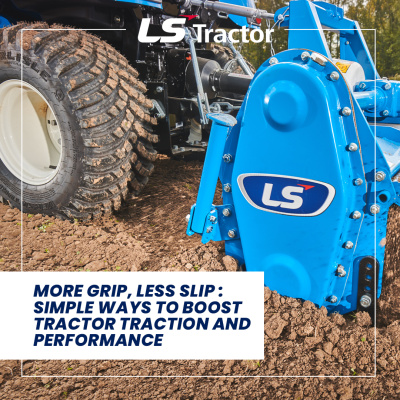
More Grip, Less Slip: Simple Ways to Boost Tractor Traction and Performance

More Grip, Less Slip: Simple Ways to Boost Tractor Traction and Performance

When you invest in a tractor, you expect it to deliver reliable power, efficiency, and performance day in and day out. At LS Tractor, we design our equipment to do exactly that. But even the most capable machine can only perform as well as the traction it puts to the ground.

When it comes to getting the most out of your tractor, traction is everything. It’s what allows your machine to convert engine power into real work – pulling implements, climbing grades, and maintaining control in tough field conditions. Without proper traction, even the most powerful tractor can fall short.

Understanding how to optimize traction – through ballast, tire selection, and setup – can dramatically improve efficiency, reduce fuel costs, and protect your soil.

What is Tractor Traction – and Why it Matters

Traction is the force that allows your tractor’s tires to grip the ground and move forward (or stop when braking). It’s how power is transferred from the drivetrain to the soil.

When traction is insufficient, tires slip. That slip leads to:

  • Increased fuel consumption
  • Reduced productivity
  • More time in the field
  • Soil damage from rutting and compaction

A properly set up tractor ensures that power is used efficiently – not wasted spinning tires.

Finding the Right Balance: Traction vs. Flotation

Traction and flotation are closely related, but often work against each other.

  • Traction focuses on grip and pulling power
  • Flotation focuses on staying on top of the soil to avoid sinking and compaction

Heavier machines with more weight tend to gain traction but risk increasing soil compaction. Lighter setups improve flotation but may sacrifice grip.

The key is balance. Your setup should reflect your soil type, moisture conditions, and the work you’re doing throughout the year.

Ballasting: The Foundation of Traction

One of the most effective ways to improve traction is proper ballasting. A general guideline is 100-120 pounds of total tractor weight per rated horsepower. Proper ballasting does more than improve traction – it also plays a major role in stability, steering control, safety, and overall tractor performance, especially during heavy-duty operations or when using mounted implements. Ballast can be added through liquid-filled tires, cast iron wheel weights, or a combination of both depending on the task and operating conditions.

However, more weight isn’t always better. Excessive ballast can increase rolling resistance, raise fuel consumption, and contribute to unnecessary soil compaction. The goal is to use only the amount of weight needed to maintain safe handling, stability, and efficient power transfer to the ground.

Liquid Ballast

Liquid ballast involves filling tires with fluid to add weight low to the ground.

Benefits:

  • Improves traction on loose or slippery surfaces
  • Lowers center of gravity for better stability
  • Helps counterbalance loaders and heavy attachments
  • Cost-effective compared to other options

Considerations:

  • Less flexible – you can’t easily adjust the weight
  • May impact ride quality at higher speeds
  • Some fluids can be corrosive or hazardous

Common liquid ballas options include:

  • Water (simple but freezes easily)
  • Beet juice (heavy, non-corrosive, but more expensive)

Wheel Weights

Wheel weights are another effective way to add ballast without the drawbacks of liquid.

Benefits:

  • Easy to install, remove and adjust (clip on or adhesive)
  • Maintain tire flexibility and ride quality
  • Improve balance and stability
  • Distribute weight evenly across all wheels

They are especially useful for operators who frequently switch tasks or field conditions.

Proper Weight Distribution Matters

Effective ballasting isn’t just about adding weight – it’s about distributing it correctly. Proper weight balance helps maintain steering responsiveness, traction, and machine stability in the field and during transport.

As a general guideline, approximately one-third of the tractor’s total weight should remain on the front axle. For many 4WD tractors, ideal front axle weight distribution typically falls between 40-45% of the machine’s total operating weight.

When using heavy rear-mounted implements, it’s important to maintain enough weight on the front wheels to preserve steering control, particularly when transporting equipment across uneven terrain or at higher travel speeds. Likewise, tractors operating with front-mounted attachments may require additional rear ballast to maintain traction and stability.

Before adding ballast, operators should always confirm that tire pressures are properly adjusted for the tractor’s load and tire specifications. Correct tire inflation works together with ballast to maximize traction, improve efficiency, and support safe operation.

No matter the application, operators should follow ballast recommendations outlined in both the tractor and implement manuals and reduce speed when operating on rough or uneven ground.

Tires: Your Direct Connection to the Ground

Tires play a critical role in both traction and flotation. Choosing the right type and using it correctly makes a significant difference.

Tire Types and Their Uses

  • R1 (Agricultural Tires):

Deep, widely spaced lugs for maximum traction in fields, mud and snow

  • R3 (Turf Tires):

Wide, shallow tread designed to protect grass and finished surfaces

  • R4 (Industrial Tires):

Durable, versatile tires for hard surfaces and heavy loads

  • R14 (Hybrid Tires)

Crossover tires that blend the tread features of agricultural, turf, and industrial tires giving them durability, less ground disturbance, and a smooth ride. Designed for versatility on mixed terrain surfaces.

Each tire type is designed for specific conditions. Matching your tire to your work environment is essential.

Tire Technology: Getting More from Every Pass

Modern tire innovations can significantly improve performance:

  • IF (Increased Flexion) and VF (Very Increased Flexion) tires allow lower air pressure while carrying the same load
  • Create a larger footprint
  • Put more lugs in contact with the ground
  • Improve traction and reduce compaction

These technologies can increase productivity and often pay for themselves through fuel savings and reduced wear.

Tire Pressure: The Most Overlooked Factor

If there’s one simple step that delivers immediate traction results, it’s proper tire inflation.

  • Overinflation reduces footprint size and traction
  • Underinflation can damage tires and reduce efficiency

Lower pressure increases the tire’s contact area, improving grip and reducing slippage. However, higher pressure is needed for road transport.

For best results:

  • Adjust pressure based on load and speed
  • Check tire pressure daily
  • Use manufacturer load/inflation tables

Consistent tire maintenance is one of the simplest ways to protect both tractor performance and long-term equipment life. Daily tire inspections should include checking for proper inflation, visible damage, and uneven wear patterns that could affect traction, ride quality, or safety. Damaged tires should be repaired or replaced promptly to avoid larger performance issues in the field.

Maintaining recommended tire pressure is critical not only for traction, but also for tire durability. Underinflated tires can lead to excessive sidewall flex, bead wear, uneven tread wear, and internal tire damage that may shorten tire life. On the other hand, overinflated tires reduce the tire’s contact patch and increase the risk of impact damage when operating across rough terrain. Excessive air pressure can also place unnecessary stress on wheels and rims under heavy loads.

Tire pressure requirements may vary depending on axle load, attachments, ballast, and operating conditions, making routine pressure checks especially important throughout changing seasons and applications. Proper inflation helps ensure your LS Tractor maintains the traction, stability, and efficiency needed to perform at its best in the field, on the jobsite, or around the property.

For safety, tire mounting, dismounting, and repairs should always be handled by qualified service personnel using the proper tools and procedures.

Matching Setup to Soil Conditions

No single setup works year-round. Smart operators adjust based on conditions:

  • Wet conditions:

Reduce ballast, increase flotation, consider deeper lug tires

  • Dry or heavy soils:

Add ballast and maximize traction

  • Transport work:

Increase tire pressure for stability and efficiency

Thinking seasonally, and even daily, can make a major difference in performance.

The Bottom Line

Maximizing tractor traction isn’t about a single solution – it’s about a system. At the end of the day, getting the most from your tractor comes down to how effectively it puts power to the ground. That’s where thoughtful setup makes all the difference.

At LS Tractor, we build machines engineered for durability, strength, and versatility – but optimizing traction through proper ballasting, tire selection, and inflation is what unlocks their full potential in the field.

By taking a proactive approach to traction management, operators can improve fuel efficiency, reduce wear on equipment, minimize soil compaction, and increase productivity across every season.

The right combination of weight, tires and pressure ensures your tractor is working smarter, not harder, no matter the task at hand. When your tractor is properly equipped for the conditions, you’re not just maintaining performance, you’re maximizing it.


Published on May 27, 2026 and written by Kimberly Steele
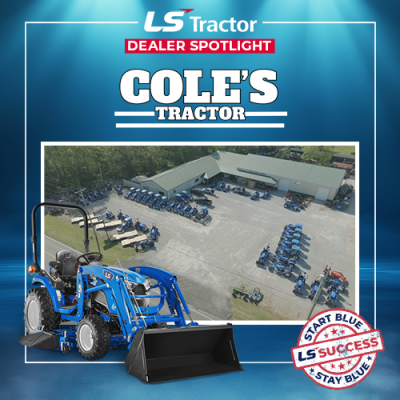
Leading the Herd with LS Tractor: Inside the Success of Cole’s Tractor & Equipment

Leading the Herd with LS Tractor: Inside the Success of Cole’s Tractor & Equipment

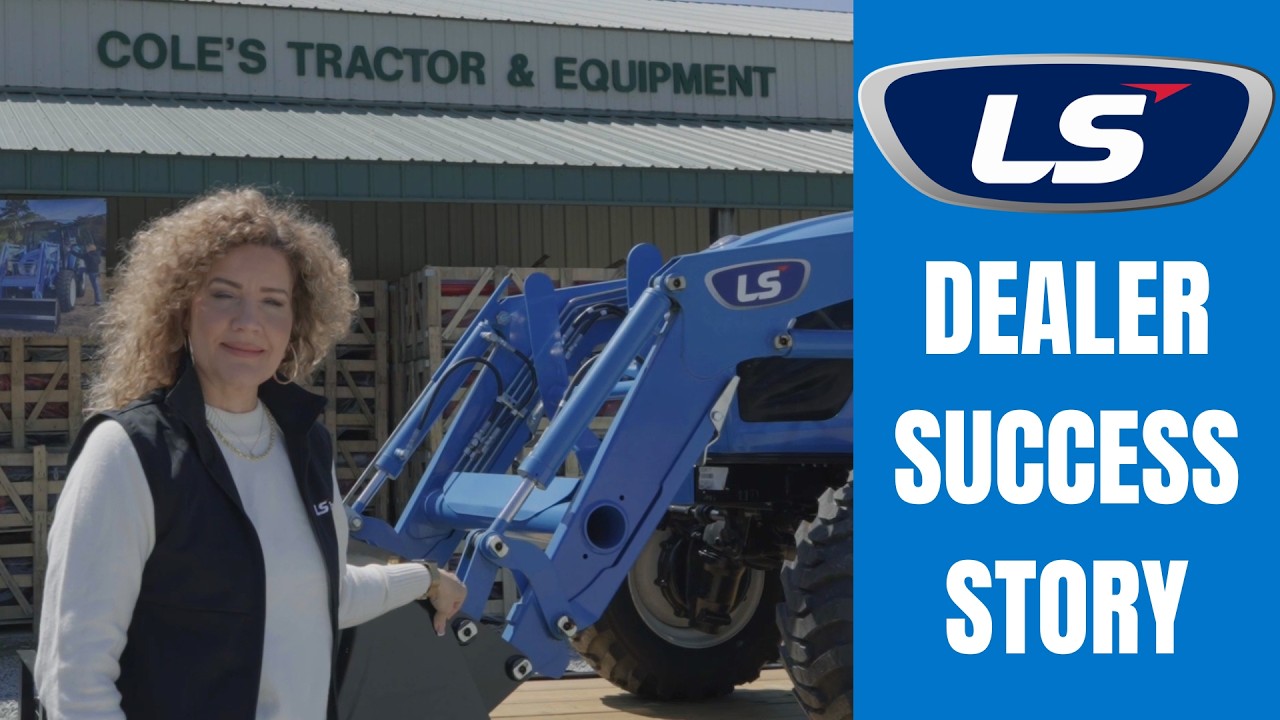
For nearly four decades, Cole’s Tractor & Equipment has built its reputation the same way many successful rural businesses do – through hard work, honest relationships, and a genuine passion for helping customers succeed. Located in Farmington, Missouri, the family-owned dealership continues to grow by focusing on what matters most: supporting customers before, during, and long after the sale.

At the heart of the business are Christy and Greg Cole, a husband-and-wife team whose journey into the tractor industry started with a simple goal and a lifelong passion. A team from LS Tractor USA recently visited the dealership to interview Christy, and learn more about what makes their business a success.


youtube placeholder image

A Passion That Became a Business

What began as a way for Greg Cole to help pay for college eventually became a thriving business now celebrating 37 years of success. Greg’s love for tractors started early, buying older machines, refurbishing them, and making them mechanically sound again. But once college was complete, he realized the tractor business wasn’t just a side job, it was the future he wanted to build.

Today, that passion continues to fuel the dealership’s growth. “We’ve been here 37 years and we’re still growing,” says Christy Cole. “What makes our dealership successful is the superior support we provide our customers.”

That commitment to service is woven into every part of the business. From first-time tractor buyers to seasoned landowners, the Cole’s Tractor team works to ensure customers leave with the right equipment and the confidence to use it successfully.

Helping Customers Build the Life They Want

As more people pursue homesteading, hobby farming, and self-sufficient lifestyles, Christy says the dealership has found its niche helping customers understand exactly what they need to accomplish their goals.

“We love helping the customer figure out what they need,” Christy explains. “People today want to own their own homestead and be self-sufficient. Helping them figure out what equipment they need to do that is what we thrive on.”

Cole’s Tractor takes pride in being the home of the original package deal. Customers often arrive looking for more that than just a tractor – they want a complete solution to go to work. “They want to pull in, get it all, hook up to it, and go home and go to work,” says Christy. “The tractor, the loader, the bucket, the box blade, the brush hog, the trailer – they want it all.”

By simplifying the buying process and bundling the right equipment together, Cole’s Tractor helps customers get started faster and with greater confidence.

Service After the Sale Matters

One of the dealership’s defining strengths is the time invested in customer education and support. “When you buy a tractor here, we spend about an hour with you doing an in-service,” Christy explains. “We show you every knob, shifter, lever, and how to take attachments off and put them back on, because we want customers to know how to use their tractor when they get it home.”

And the support doesn’t stop once the customer leaves the lot. “We always say, ‘Hey, we’re just a phone call away.’ Give us a call, we’ll walk you through it, we’ll help you.”

That level of commitment reflects the dealership’s mission: Our Mission is Yours. It’s more than a tagline – it’s the philosophy behind every customer interaction. Whether customers prefer to shop in person, over the phone, or through text communication, the team at Cole’s Tractor works to provide a seamless experience that exceeds expectations.

Why LS Tractor Fits the Cole’s Tractor Philosophy

For the past 13 years, LS Tractor has played an important role in the dealership’s continued growth and success. According to Christy, adding LS Tractor to their lineup was a natural fit because of the value and reliability the brand delivers to its customers.

“To us, there just is no better deal on the market for what you get,” says Christy. “The quality, the features, the price, the warranty – LS gives customers more.”

She often encourages shoppers to compare brands before making a decision. “I tell people all the time, go do your homework, and they come back all the time and say, ‘Yep, you were right.’”

The confidence comes from years of seeing customers return again and again. “We have customers on their second, third, and fourth LS Tractor,” Chrisy explains. “Once they see the quality of the tractor, the backing of the LS brand, and the support from our dealership, they come back for another one.”

Award-Winning Growth and Customer Trust

The dealership’s customer-focused approach continues to deliver impressive results, earning the #1 sales ranking in the state across multiple months. Further reinforcing this success, Cole’s Tractor received its first-ever LS Tractor Blue Diamond Dealer Award and achieved more than 30% market share within the compact tractor segment in 2024.

The dealership also earned recognition as a Top 5 Financing Producer through ACUSI and received the Territory Award for Most Improved Player.

But for Christy and Greg, those achievements are ultimately about the customers who made them possible. “We couldn’t have done any of this without the support of our customers,” the dealership shares on their website. “We value all of our customers and take pride in providing superior support after the sale.”

LS Tractor USA Regional Manager, Dave Teigen notes, “Cole’s Tractor & Equipment has maintained a high growth rate in a very traditional market.” Their ability to consistently grow while building long-term customer relationships reflects both the strength of the dealership and the trust they’ve earned throughout the region.

The dedication to customer success aligns perfectly with the LS Tractor philosophy – delivering more standard features, more performance, more warranty coverage, and greater value for hardworking landowners.

Looking Toward the Future

Beyond the dealership, Cole’s Tractor & Equipment remains deeply involved in the local community. Dave Teigen shared that the dealership has been a strong supporter of the local rodeo, where LS Tractor branding has become a familiar sight and another reflection of the dealership’s commitment to the people and communities it serves. With strong community support, a growing customer base, and continued partnership with LS Tractor, the future looks bright for Cole’s Tractor & Equipment.

“The future looks great with LS,” says Christy. “They’re a great company to work with. They back their product, they back their customers, and the back their dealerships.”

After 37 years in business, one thing remains clear: customers aren’t just buying tractors at Cole’s Tractor – they’re gaining a trusted partner committed to helping them succeed for years to come.

As the team at Cole’s Tractor likes to say: “We don’t just follow the herd, we lead the herd.”


Published on May 20, 2026 and written by Kimberly Steele
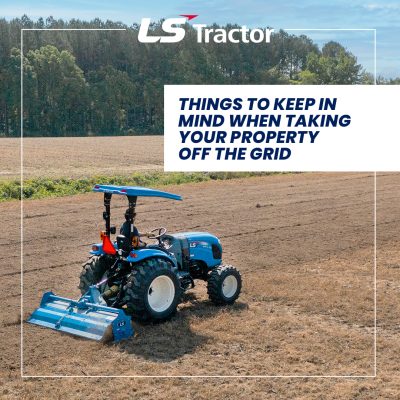
Things to Keep in Mind When Taking Your Property Off the Grid

Things to Keep in Mind When Taking Your Property Off the Grid

How smart planning – and the right equipment – can set you up for long term success


Going off the grid is more than a trend – it’s a commitment to independence, sustainability, and a hands-on way of life. Whether you’re dreaming of a fully self-sufficient homestead or simply reducing reliance on public utilities, success depends on thoughtful planning, realistic expectations, and having the right tools to get the job done.

For many property owners, brands like LS Tractor have become part of that journey – supporting rural and off-grid communities with equipment designed for reliability, simplicity, and long-term use.

Here’s what to consider before taking your property off the grid and why having a reliable tractor can make all the difference.

Start With Your Land: Resources and Limitations

Every off-grid journey begins with a clear understanding of your property. Evaluate your land for natural resources like water access, soil quality, sunlight exposure, and timber. These factors will shape everything from your food systems to your energy setup.

It’s equally important to research local zoning laws, building codes, and environmental regulations. While off-grid living is generally legal, restrictions can affect what you’re allowed to build or install.

Budgeting matters, too. Initial setup costs can range widely depending on your goals, so plan not only for installation, but also for ongoing maintenance and upgrades.

Build a Reliable Energy System

Energy independence is at the core of off-grid living. Most properties rely on solar power systems paired with battery storage and a backup generator. Depending on your location, wind or micro-hydro systems can provide additional support.

The key is designing a system that matches your actual usage, not just peak demand. Efficient energy habits, like minimizing unnecessary consumption and using energy-saving appliances, will extend the life of your system and reduce costs over time.

Secure a Sustainable Water Supply

Water is non-negotiable. A dependable source, whether it’s a well, rainwater collection, or a natural spring, is essential for daily life. Once sourced, water must be filtered and purified for safe use.

You’ll also need a plan for wastewater. Septic systems, composting toilets, and greywater recycling all play a role in maintaining a clean and sustainable property.

Managing water systems often involves digging trenches, transporting materials, and maintaining infrastructure – tasks made significantly easier with a capable tractor – especially when using equipment designed with durability and hydraulic performance needed for remote property work, like those offered by LS Tractor.

Grow Your Own Food

A productive food system is what transforms a property into a true homestead. Start with a garden tailored to your climate, then expand into perennial crops and possible livestock for protein and fertilizer.

Food preservation is just as important as production. Techniques like canning, drying, fermenting, and root cellaring ensure your harvest lasts year-round.

Many homesteaders rely on dependable compact tractors, such as those from LS Tractor, to handle seasonal demands without interruption – an important factor when your food supply depends on it. From preparing soil to hauling compost and maintaining pastures, a tractor becomes an everyday necessity in building and sustaining your food supply.

Develop Practical Skills

Off-grid living rewards those who can do things themselves. Construction, equipment repair, gardening, water management, and even basic medical knowledge all become part of daily life.

While some specialized work may require professionals, the more skills you develop, the more self-reliant, and cost-effective you’ll be.

Prepare for Real-World Challenges

Living off the grid isn’t without its difficulties. Expect long workdays, unpredictable weather, and limited access to emergency services. Isolation can also be a factor, especially in rural locations.

Preparation is key. Keep emergency supplies on hand, maintain communication options, and build connections with nearby communities whenever possible.

Budget Wisely and Plan for Income

While off-grid living can reduce monthly utility costs, it doesn’t eliminate expenses. Equipment, repairs, and supplies all require financial planning.

Many off-grid homeowners supplement their income by selling produce, crafts, or services – or by working remotely. A well thought out financial plan ensures your lifestyle remains sustainable long-term.

Design for Efficiency and Sustainability

Smart design reduces workload and resource use. Energy-efficient buildings, proper insulation, and solar heating can dramatically lower energy needs.

Sustainable systems, like composting, recycling, and water reuse not only benefit the environment, but also make your property more self-sufficient.

Adjust Your Mindset

Going off the grid is as much a lifestyle shift as it is a physical one. It means trading convenience for independence and embracing problem-solving as part of everyday life. Patience, adaptability, and a willingness to learn will carry your further than any single system or tool.

Consider Starting Small

You don’t have to go fully off-grid overnight. Many people begin with partial steps like installing solar panels or starting a garden before transitioning completely. This gradual approach allows you to build skills, spread out costs, and refine your systems over time.

Why a Tractor is Essential for Off-Grid Living

No matter how well you plan, off-grid living is labor intensive. That’s where a tractor becomes one of the most valuable investments you can make. This is why many off-grid property owners turn to brands like LS Tractor, known for building practical, operator-focused machines that perform in demanding, remote environments.

A compact, durable tractor provides:

  • Versatility: From tilling gardens and mowing fields to hauling firewood and maintaining roads, one machine can handle dozens of tasks.
  • Efficiency: What might take days by hand can often be completed in hours.
  • Independence: You won’t need to rely on outside contractors for routine land management.
  • Durability: Built for rugged conditions, tractors are designed to perform in the same environments where off-grid living thrives.
  • Long-term value: The time and labor saved quickly offset the initial investment.

For off-grid property owners, a tractor isn’t just equipment – it’s the backbone of daily operations. Whether you’re clearing land, planting crops, or maintaining infrastructure, having a reliable machine ensures you can keep your homestead running smoothly year-round.

The Bottom Line

Taking your property off the grid is a rewarding challenge that combines careful planning with continuous learning. By understanding your land, building reliable systems, and equipping yourself with the right tools, you can create a lifestyle that’s both sustainable and empowering.

With the support of reliable equipment and a network that understands the needs of rural landowners, including companies like LS Tractor, property owners can approach off-grid living with greater confidence. And when it comes to managing the demands of off-grid living a dependable tractor isn’t just helpful – it’s essential.


Published on May 8, 2026 and written by Kimberly Steele
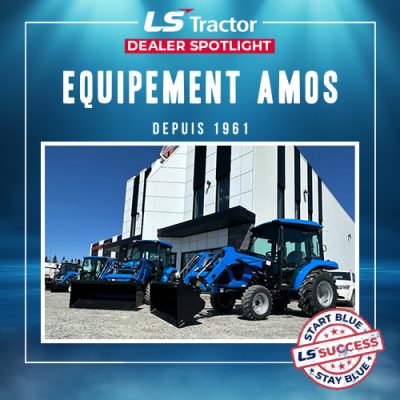
LS Dealer Spotlight: Équipement Amos

LS Dealer Spotlight: Équipement Amos Strengthens Its Market with LS Tractor

Located in western Quebec, Canada, LS Tractor dealership, Équipement Amos is growing strong – combining decades-long legacy of service with the performance and value of LS Tractor to better serve today’s customers. This dealership has built a reputation that stands the test of time. Since opening its doors in 1961, the dealership has evolved into a trusted name in heavy trucks, equipment, and now compact tractors – serving agricultural, municipal, and residential customers with a commitment to quality and reliability.

A Legacy of Service and Expertise

From its earliest days, Équipement Amos focused on more than just sales. The company established itself through exceptional after-sales service, deep technical expertise, and strong strategic partnerships. One standout collaboration has been with Fabrinord, specializing in the manufacturing and installation of custom equipment solutions.

Over the years, the dealership has continued to expand, adapting to the changing needs of its customers. The addition of LS Tractor products in 2020 marked a significant step forward, allowing Amos Équipement to better serve a growing demand for compact, high-performance equipment.

A Natural Path into Agriculture

For Maxime Corriveau, the journey into the agricultural sector wasn’t a straight line – but it was a natural progression. With a background in recreational vehicles and automotive industries, he brought extensive experience in sales and service management.

“Joining Équipement Amos opened my eyes to the potential in agriculture,” he explains. “I quickly saw how important it is to provide customers with reliable equipment and the right support to succeed.”

Today, Maxime plays a key role in business development, focusing on expanding markets, increasing sales, and strengthening the dealership’s tractor division.

Why LS Tractor?

The decision to partner with LS Tractor has proven to be a strategic advantage. By adding the LS lineup, Équipement Amos was able to diversify its offerings and reach new customers across multiple sectors.

According to Maxime, customers are drawn to LS tractors for several key reasons:

  • Exceptional value for the money
  • Fully equipped models with standard features
  • Durable, reliable performance
  • Industry-leading 6-year warranty

“These factors really build confidence with our customers,” he says.

Maxime has also had firsthand experience operating LS tractors, particularly models in the MT1 and MT2 series. His feedback is clear: “They’re reliable, easy to use, and incredibly well-equipped for their category.”

Standing Out Through Service

What truly sets Équipement Amos apart is its dedication to customer support. With multiple service locations strategically positioned across the region, a knowledgeable team, and strong inventory availability, the dealership ensures customers get what they need when they need it.

“Our strength is our proximity to customers and our after-sales service,” Maxime notes. “We pride ourselves on delivering quickly and offering complete solutions.”

Recognition from Leadership

From a business management perspective, Équipement Amos stands out as a high-performing and forward-thinking dealership. According to LS Tractor Business Manager Yves Beaulieu, Équipement Amos continues to stand out for several reasons:

  • Strong unit retail performance despite industry challenges.
  • Impressive market share in their primary county, with continued growth across surrounding regions.
  • Effective local marketing strategies and active involvement in community events.
  • A consistent focus on delivering high-quality after-sales service that builds long-term customer loyalty

These factors reflect a dealership that not only understands its market, but actively invests in sustaining and growing it.

Overcoming Challenges, Building for the Future

Like many in the industry, Équipement Amos has faced challenges – particularly with supply chain delays. Rather than slowing down, the team adapted by increasing inventory levels and improving planning processes to better meet customer demand.

Looking ahead, the dealership has clear goals:

  • Continue steady growth
  • Strengthen its leadership position in the region
  • Expand the LS Tractor division with increased inventory and market presence

Advice for Fellow Dealers

Maxime offers practical advice for other LS Tractor dealers looking to grow:

“Invest in the after-sales service, maintain strong inventory levels, and stay proactive in developing your market. At the end of the day, customer relationships are everything.”

Proud to Serve the Community

Équipement Amos remains deeply connected to its community and proud of its role in supporting regional development.

“We’re proud to represent LS Tractor in Abitibi,” Maxime says. “It’s rewarding to contribute to our region’s growth with products that are reliable and high performing.”

As Équipement Amos continues to grow, its commitment to quality, service, and long-term relationships remains unchanged. Paired with strength, reliability, and the value of LS Tractor, the dealership is well-positioned to serve its community for generations to come.


Published on May 4, 2026 and written by Kimberly Steele
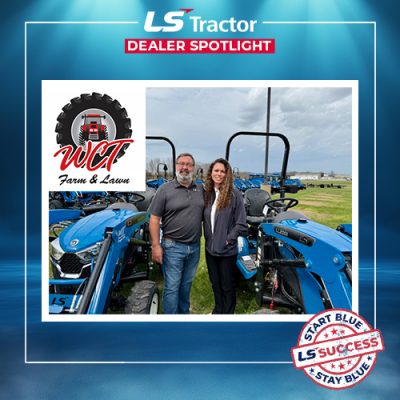
LS Dealer Spotlight: WCT Farm and Lawn

Driven to Grow: How One Missouri Dealership is Expanding with LS Tractor

In the heart of southwest Missouri, just off Interstate 44, WCT Farm and Lawn has become a standout example of what’s possible when strong leadership, a customer-first mindset, and a trusted product line come together. Under the ownership of Steve Heil, the dealership has experienced remarkable growth – nearly doubling its sales volume in just a few years – while staying rooted in the values that matter most: service, relationships, and community.

A Strong Foundation, Accelerated Growth

WCT Farm and Lawn has served its community for 27 years and has been an LS Tractor dealer for 19 of those. When Steve Heil purchased the dealership in March 2022, it was already a well-established business. But with his extensive background as a business owner and a degree from Missouri State University, Steve saw an opportunity to build on that foundation.

Since taking ownership, he has guided the dealership from a $6 million operation to more than $11 million in annual sales, with projections to surpass $12 million. Strategic investments in inventory, expanded product lines, and increased floor planning have played a key role in that growth. Just as important has been the dealership’s highly visible location – welcoming tens of thousands of drivers each day – and a commitment to making a strong first impression with signage and a robust equipment display.

Hands-On Leadership and a Customer-First Culture

What truly sets WCT Farm and Lawn apart is its approach to customer service. Steve is a firm believer in being present and accessible. His office sits right at the front of the dealership, and he is on-site every day. Steve’s commitment to being present is shared at home as well as at work – his wife, Melissa, works alongside him at the dealership, helping reinforce a family-oriented culture that customers immediately feel when they walk through the door.

While he credits his team for doing the “heavy lifting,” Steve emphasizes that leadership presence helps reinforce a culture where customers feel valued from the moment they arrive at the dealership. That commitment extends well beyond the initial sale.

“The sales department sells the first tractor,” Steve explains, “but our service and parts departments sell the second and third.” That commitment to service is recognized across the LS network. As LS Tractor USA Business Manager Skot Myrick explains, “WCT’s commitment to exceptional customer service isn’t just a philosophy, it’s a measurable advantage. When you pair that dedication with the strength and reliability of the LS Tractor brand, you create an experience customers can trust and results they can feel.”

This philosophy is central to the dealership’s success. Whether it’s helping a first-time tractor owner troubleshoot over the phone or supporting a long-time customer with parts and service, WCT Farm and Lawn prioritizes relationships that last. As a repeat recipient of the LS Tractor Blue Diamond Award for dealerships, Steve understands the significance of a team approach when it comes to running a thriving business.

The LS Tractor Advantage

LS Tractor has been the cornerstone of WCT Farm and Lawn’s business for nearly two decades. As one of the first LS dealers in Missouri – a state that continues to be a strong market for the brand – the dealership has built deep expertise and loyalty around the product line.

According to Steve, LS stands out for its value and performance. “You get more tractor and more standard features compared to competitors,” he says. “It’s a quality machine that’s built well and designed for comfort and performance.”

The MT2 Series, in particular, has become a top seller. With the region seeing an increase in smaller acreage properties and hobby farms, these versatile tractors, typically in the 25-50 horsepower range, are ideal for a wide range of tasks. For larger agricultural operations, higher horsepower models also play an important role, especially in hay production.

Steve himself uses LS equipment at home. He is currently operating an MT225S with a backhoe for property gardening projects, giving him firsthand experience with the product he sells.

Building Trust Through Service

One of the biggest challenges in the equipment business, Steve notes, is building trust – especially on the service side. While sales often come naturally, earning a customer’s confidence when it comes to repairs, maintenance, and ongoing support requires consistency and transparency.

WCT Farm and Lawn addresses this by hiring skilled technicians, maintaining fair pricing, and focusing on doing what’s right for the customer. Their service department also acts as a technical support hub, with many calls coming from first-time tractor owners who need guidance after the purchase.

By helping customers troubleshoot issues remotely whenever possible, the team saves them time and reinforces the dealership’s commitment to service.

Deep Roots in the Community

As a family-run business, Steve and Melissa Heil are both actively involved in supporting local programs and community events. WCT Farm and Lawn stays closely connected to its local community through active involvement in agricultural and civic initiatives. The dealership supports multiple FFA programs, participates in local fundraisers and parades, and contributes to events like charity golf tournaments. As a strong supporter of the local Chamber of Commerce, the business remains engaged with both rural and small-town communities.

This connection not only strengthens relationships, but also reflects the dealership’s long-term commitment to the people it serves.

Looking Ahead

With continued growth on the horizon, Steve plans to expand both product offerings and the dealership’s physical footprint. With 10 acres of property – only half of which is currently in use – there is room to grow inventory and explore opportunities such as equipment rentals.

At the core of these plans is a careful approach to partnerships. “We’re only as good as the products we carry,” Steve says. “As a dealer, we’re the liaison between the customer and the manufacturer.”

Advice for Success

For fellow LS dealers, Steve emphasizes the importance of partnership and patience – especially when it comes to warranty processes and parts availability. A strong dealer network, he believes, is essential to supporting customers and protecting the brand.

For first-time tractor buyers, his advice is simple: focus on the dealership as much as the machine. Understanding your needs and building a relationship with a trusted local dealer can make all the difference in the ownership experience.

From its rapid growth to its unwavering focus on service, WCT Farm and Lawn exemplifies what it means to be a successful LS Tractor dealership. With strong leadership, a dedicated team, and a commitment to doing right by every customer, the dealership continues to set a high standard for excellence in the industry.

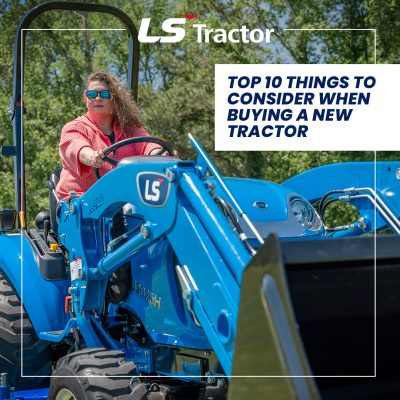
Top 10 Things to Consider When Buying a New Tractor

Top 10 Things to Consider When Buying a New Tractor

The tractor has long stood as a symbol of agricultural progress – strength, reliability, and the ability to get more done with less effort. Today’s machines go far and beyond raw power. Modern tractors are engineered with advanced technology that improves efficiency, reduces fuel consumption, and delivers precision across a wide range of tasks. Brands like LS Tractor exemplify this evolution, combining innovative engineering with dependable performance to meet the demands of today’s landowners and farmers.

Whether you’re managing a few acres or running a large-scale operation, choosing the right tractor is one of the most important investments you’ll make. The ideal machine should match your land, your workload, and your long-term goals, not just your wish list.

Here are the top 10 factors to consider when purchasing your next tractor.

  1. Choose the Right Tractor Type

Tractors come in several classes, and selecting the right platform is the foundation of a smart purchase. Choosing the right tractor depends on your specific needs, such as property size, workload, and budget.

  • Sub-Compact (General Range = 20-25 HP): Easy to operate and ideal for light duty tasks on small properties under 5 acres. Perfect for mowing, light landscaping, gardening, and snow removal. Easy to operate and store, often fitting in a standard garage. They are ideal for working on hobby farms and small ranches.
  • Small Compact (General Range = 25-40 HP): Larger than sub-compact tractors with a step up in power and stability, these machines are well suited for hobby farmers and small acreages needing more capacity. The smaller size still makes them very maneuverable and less expensive while still compatible with a large number of implements and attachments.
  • Compact (General Range = 40-60 HP): Generally designed for properties over 10 acres with open fields and pastures and can handle significant ground engagement work and multiple heavy-duty applications. Perfect for heavier workloads like digging, brush cutting, snow blowing, crop work, and material handling. They tend to be more comfortable for longer workdays and offer more customization and advanced features options.
  • Utility (General Range = 60-100+ HP): Built for serious farming – hay production, moving material, tillage, and heavy-duty fieldwork. These machines combine power with impressive versatility. A wide variety of attachments and implements can expand its capabilities.

The key is honesty: the best tractor isn’t always the biggest – it’s the one that fits your specific situation.

  1. Climate Control: Cab vs. Open Station (ROPS)

Your operating environment plays a big role in comfort and safety.

  • Cab Tractors: Offer protection from weather, dust, and insects. With heat and air conditioning, they provide year-round comfort and reduce operator fatigue. Cab tractors are generally more expensive due to the additional features they provide.
  • ROPS (Roll-Over Protection Structure): An open-air tractor that is often more affordable and versatile, especially in tight spaces. Foldable designs allow access to low-clearance areas. These units allow you to reach things without getting out of the tractor and can help you see things better without the cab obstruction.

If you spend long hours in extreme weather, a cab is worth the investment. For flexibility and lower cost, an open station may be the better choice.

  1. Engine Horsepower (HP)

Horsepower determines what your tractor can handle. This is important because it determines what work your tractor will be capable of, what attachments you can operate, and the ease with which your work will flow.

  • 1-5 acres: 20-25 HP for mowing, light hauling and loader work, and a great inexpensive starter tractor
  • 5-10 acres: 25-35 HP for mowing, loader work, and tilling
  • 10-25 acres: 35-50 HP for heavier loader tasks, plowing and baling small hay fields
  • 20-50 acres: 50-75 HP for hay production, medium tillage, and loader and backhoe work
  • 50+ acres: 75+ HP for full-scale farming, heavy tillage and baling

Too little power leads to frustration. Too much means unnecessary cost and fuel use. Aim for the sweet spot – and consider future growth.

  1. PTO Horsepower

Power Take-Off (PTO) horsepower is what runs your implements – mowers, tillers, balers and more.

Because PTO power is typically 10-20% lower than the engine HP, it’s critical to match your tractor’s PTO output with the requirements of your attachments. Proper alignment ensures better performance, less wear, and longer equipment life.

  1. Lift Capacity

Lift capacity determines how much your tractor can safely handle with its loader or three-point hitch. When selecting a tractor, ensure the loader and 3-point lift capacity meets your needs.

  • Greater capacity means handling heavier materials and implements
  • Capacity decreases as the load moves higher or farther from the tractor
  • Proper ballast improves safety and stability

Choosing a tractor with slightly more lift capacity than you currently need can pay off in the long run.

  1. Hydraulic Performance

Hydraulics power many of your tractor’s most important functions including power steering, as well as the performance and efficiency of loader work.

  • Higher flow rates (GPM) mean faster and stronger operation
  • Critical for running hydraulic-driven implements
  • Upgrades after purchase are expensive – plan ahead

Understanding your hydraulic needs now helps avoid limitations later.

  1. Transmission Type

The transmission affects how your tractor feels and performs.

  • Hydrostatic (HST): Easy, smooth operation – great for beginners and loader work and offers better speed control.
  • Gear Drive: Cost-effective and efficient with a classic clutch and gear system. It may require more skill and practice, but offers greater control and maximum PTO performance.
  • Power Shuttle: Clutch-free transmission engagement ideal for frequent direction changes like loader work.

Your choice should reflect your experience level and the type of work you do most often.

  1. Tires and Traction

The right tires make a big difference in performance and surface impact. Always consider tread patterns and choose tires with the appropriate tread for your specific agricultural needs.

  • R1 (Ag Tires): Best for field traction with large widely spaced lugs for maximizing traction on soil translating into better power delivery.
  • R3 (Turf Tires): Wide tires with shallow treads and closely spaced lugs that protects lawns and finished surfaces
  • R4 (Industrial Tires): A balanced option for mixed terrain offering better traction on hard surfaces with excellent wear performance.
  • R14 (Hybrid Tires): Blends R1 and R4 characteristics allowing for more flexibility for a wide variety of applications.

Also consider radial vs bias construction. Radial tires are considered superior as they are more flexible, a smoother ride, and offer better traction and fuel efficiency. Bias tires are less expensive but are durable and tough for operating on rough terrain. Always verify the tire’s load capacity and keep proper inflation to maximize efficiency and longevity.

  1. Implement Compatibility

A tractor’s value is greatly expanded by its attachments and implements.

Common attachments and implements include:

  • Front-end loaders
  • Rotary cutters
  • Backhoes
  • Mowers and tillers

Be certain to evaluate the different tasks in which you plan to utilize your tractor. Make sure the tractor you choose has the horsepower, PTO, hydraulics, and hitch system that will align with the tools you plan to use – both now and in the future.

  1. Loader Lift Height

Lift height matters more than many buyers realize.

  • Higher lift allows easier loading into trucks or stacking materials
  • Greater height requires more ballast for stability
  • Lifting is safest when loads stay low and close to the tractor

Understanding these limits helps you operate safely and efficiently.

Why Your Brand and Dealer Matter

Beyond specs and features, the brand you choose plays a major role in your long-term satisfaction. A trusted manufacturer like LS Tractor delivers a balance of performance, innovation, and value, backed by strong warranties and dependable support.

Equally important is your dealer. A knowledgeable dealer helps you:

  • Select the right tractor model
  • Match implements to your needs
  • Maintain your equipment for peak performance

A reliable brand like LS Tractor and a trustworthy dealer can make a significant difference in the support you receive when deciding on a new tractor purchase.

Final Thoughts

Buying a tractor isn’t just a purchase – it’s an investment in your productivity, efficiency, and future success.

The right machine should:

  • Match your land and workload
  • Support your long-term goals
  • Make your daily tasks easier and more efficient

When you carefully evaluate your options and choose a tractor that fits your operation, you’re setting yourself up for years of dependable performance and growth.

And with the right partner – like LS Tractor – you can move forward with confidence, knowing your equipment is built to work as hard as you do.


Published on April 6, 2026 and written by Kimberly Steele
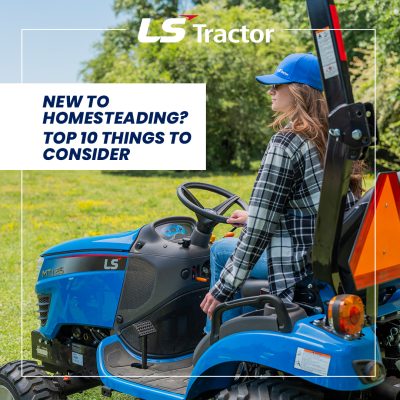
New to Homesteading? Top 10 Things to Consider

New to Homesteading? Top 10 Things to Consider

Do you dream of growing your own food, cooking meals from scratch, and living a more sustainable lifestyle? Homesteading is more than a trend – it’s a lifestyle rooted in self-sufficiency, resilience, and a deeper connection to the land.

At its core, homesteading is about making more of what you need at home. You grow food, preserve it, cook from scratch, care for animals, fix what breaks, and develop practical skills that help you rely less on outside systems. It’s not about perfection – or doing everything all at once. It’s about learning as you go, solving problems, and building a lifestyle that works for you and your family.

Whether you’re dreaming of fresh eggs every morning, growing your own produce, or simply enjoying a quieter, more intentional way of living, getting started can feel overwhelming. If you are new to homesteading, here are the top 10 things to consider before you dive in.

  1. Define What Homesteading Means to You

Homesteading looks different for everyone. Are you aiming for full self-sufficiency, or just supplementing your grocery store trips? For some, it means raising livestock and growing all their own food. For others, it’s a garden, a few chickens, and cooking more meals at home.

Be realistic about your property, your time, and your goals. Are you staying where you are or starting fresh on new land? Clarifying your goals will help guide every decision from land size to equipment. Your vision will shape everything that follows.

  1. Plan Ahead but Stay Flexible

Homesteading requires thinking ahead. Location matters. Consider soil quality, water access, climate, zoning regulations, and proximity to resources. Even a few acres can be highly productive if used wisely.

Water is essential for both crops and livestock. Think about irrigation systems, rainwater collection, drainage, and access to natural water sources. Efficient water use can save time and money.

Crops, animals, and seasonal work all run on timelines. Seeds need the right conditions to grow. Eggs take time to hatch. Breeding, harvesting, and preserving all require planning.

At the same time, expect the unexpected. Weather changes, equipment breaks, and not every plan works out. Research thoroughly, learn from others, and adapt as needed.

  1. Start Small and Build Gradually

It’s tempting to do everything at once, but that can quickly lead to burnout. It’s easy to get overwhelmed in the beginning. Start with a manageable project like a small garden or a few chickens. Learn what works before expanding.

Many successful homesteaders will tell you – it’s better to do a few things well than to struggle with too much at once. Even apartment dwellers can begin with container gardens or simple from scratch cooking. A simple start is best, then expand as you gain confidence and experience.

  1. Budget Realistically and Invest Wisely

Homesteading can save money over time, but upfront costs add up quickly. Tools, fencing, seeds, animals and infrastructure all require investment.

Having the right tools can make or break your homesteading experience. A dependable tractor is often the backbone of a successful homestead – helping with everything from mowing and tilling to hauling and land clearing. Choose equipment that matches your property size and workload.

Prioritize what you truly need and build from there. Reliable equipment can make daily tasks more efficient and less physically demanding, especially as your homestead grows. Create a realistic budget and prioritize essential investments first.

  1. Build a Support Network

Homesteading is not meant to be done alone. Strong communities are at the heart of successful homesteads. Sharing knowledge, tools, and experiences can make your journey smoother and more enjoyable.

Connect with local farmers and neighbors, join online groups, and seek out mentors, especially if you’re raising specific animals. Having someone to ask questions or troubleshoot problems can save you time, money and frustration.

  1. Develop Practical, Everyday Skills

Homesteading is built on a wide range of skills. Gardening, basic carpentry, food preservation, equipment maintenance, and even cooking from scratch all play a role.

These skills not only save money, but also give you confidence and independence. Over time, many homesteaders even create small income streams by selling extra produce, eggs, or handmade goods. You don’t need to know everything right away – just be willing to learn.

  1. Build Healthy Soil and Compost Systems

Good soil is the foundation of a productive homestead. Healthy soil equals healthy crops. Test your soil to determine nutrient levels and pH, and amend it as needed.

Composting is one of the simplest and most effective ways to naturally enrich your soil over time.  By turning kitchen scraps and yard waste into nutrient-rich compost, you reduce waste while creating healthier growing conditions for your crops.

  1. Protect your Land, Animals, and Investment

If you plan to raise livestock, start with animals that match your experience level and property setup. Chickens are often a beginner-friendly option. Make sure you understand feeding, housing, and healthcare needs before bringing animals home.

Fencing and shelter are essential. A well-built fence keeps livestock in and predators out, while secure coops and shelters protect animals from weather and threats.

From chickens to large livestock, planning for protection early will prevent costly and discouraging setbacks later.

  1. Preserve What you Grow

A productive garden often yields more than you can use at once. Learning how to preserve food through canning, freezing, drying, or fermenting ensures nothing goes to waste.

Those preserved foods become especially valuable during the winter months when fresh options are limited and your hard work continues to pay off.

  1. Keep Records and Keep Learning

You don’t need anything complicated – a simple notebook works. Track what you plant, what grows well, how much you harvest, and what your animals consume.

Homesteading is a long-term learning process. Mistakes will happen, but they’re part of the journey. Keeping records helps you improve year after year.

Final Thoughts

Homesteading is not a contest, and there are no strict rules. It’s not about doing everything perfectly or eliminating every trip to the grocery store. It’s about progress – learning to provide more for yourself, becoming more resourceful, and building a life that feels grounded and intentional.

It can be challenging at times, but it’s also a rewarding journey that offers independence, resilience, and a strong sense of accomplishment. You gain a better understanding of your food, your land, and your capabilities. You create something meaningful, whether that’s a garden, a skillset, or a legacy to pass on.

With clear goals, thoughtful planning, a willingness to learn, and the right tools to support your work, you can build a homestead that grows with your over time. At LS Tractor, we are proud to support homesteaders with dependable equipment that makes day-to-day tasks more manageable, so you can spend more time enjoying the life you’re building. We know homesteading isn’t just about the land – it’s about the people and purpose behind it. We’re here to help you tackle the work with confidence.

Start small, stay curious, and enjoy the process. With the right support and preparation, your homesteading dream is closer than you think.


Published on March 31, 2026 and written by Kimberly Steele
5 Must-Have Implements and Attachments for Your Compact or Utility Tractor

5 Must-Have Implements and Attachments for Your Compact or Utility Tractor

Buying a tractor is only the beginning. The real versatility of a compact or utility tractor comes from the implements you pair with it. With the right implements, a single tractor can tackle landscaping, property maintenance, agriculture, and material handling tasks with ease.

LS Tractor offers a wide range of durable attachments and implements designed to help operators get more from their equipment. Whether you’re managing acreage, maintaining a farm, or caring for rural property, these implements can dramatically expand what your tractor can do.

Here are five essential implements every tractor owner should consider – plus one honorable mention for those who deal with significant winter weather.

  1. Front-End Loader

A front-end loader is one of the most commonly used and versatile tractor attachments available. Mounted to the tractor’s frame, this attachment allows operators to scoop, lift, and move loose materials efficiently.

From gravel and sand to mulch and manure, a front-end loader handles a wide range of materials with precision. Tasks that might take a full crew hours to complete manually can often be finished in minutes with the help of a loader.

Beyond efficiency, loaders also improve safety by reducing the need for heavy manual lifting. Operators can transport and place materials exactly where they are needed, minimizing waste and saving time.

Common uses include:

  • Moving soil, gravel or sand
  • Transporting hay bales and feed
  • Clearing debris or rubble
  • Spreading mulch or stone
  • Removing snow
  • Handling manure, fertilizer, or topsoil

For property owners and businesses alike, a front-end loader can dramatically increase productivity while lowering labor demands.

  1. Rotary Cutter or Finishing Mower

Vegetation management is a constant task for many landowners, and having the right mower makes all the difference. Two popular options are rotary cutters and finishing mowers, each designed for different types of terrain and maintenance needs.

Rotary Cutter

Rotary cutters are built for tackling rough overgrown areas such as fields, pastures, and roadsides. These heavy-duty implements feature a large rotating blade beneath a wheeled frame and are designed to handle tall grass, thick weeds, brush, and even small saplings.

They are ideal for land that requires occasional maintenance rather than frequent mowing. By cutting down and mulching heavy vegetation, rotary cutters help maintain grazing areas, reduce fire hazards, and prevent pests from thriving in overgrown fields.

Finishing Mower

A finishing mower – sometimes called a grooming mower – is designed for well-maintained grass areas that require a clean, manicured appearance. Equipped with multiple blades and four support wheels, these mowers deliver a smooth and even cut.

They’re commonly used on large lawns, parks, or golf-course style properties where appearance matters.

Both implements are essential tools for managing vegetation, allowing operators to maintain everything from rugged pastures to carefully groomed landscapes.

  1. Box Blade

The box blade is one of the most versatile grading tools available for compact and utility tractors. Shaped like a three-sided metal box with scraping blades on the front and rear, this implement is built for moving and leveling soil or gravel.

One of its key features is adjustable scarifiers – also known as rippers – which dig into compacted ground to break it apart. Once loosened, the box blade can distribute material to smooth and level the surface.

Because the implement can carry material inside the box as it moves, it’s ideal for spreading and grading tasks.

Typical applications include:

  • Repairing and maintaining gravel driveways
  • Leveling uneven terrain
  • Filling ruts or potholes
  • Backfilling trenches
  • Spreading gravel, soil, or sand
  • Creating drainage areas or ditches

Many tractor owners consider the box blade a go-to tool for property maintenance because it can perform so many different tasks with a single attachment.

  1. Rake Grapple or Root Grapple

When it comes to land clearing and debris management, grapple attachments transform a tractor into a powerful material-handling machine. Two popular options are rake grapples and root grapples, each suited to different tasks.

Rake Grapple

A rake grapple uses long, curved tines that dig slightly below the soil surface. As the tractor moves forward, these tines pull up roots, vines, and small stumps while allowing loose soil to sift through.

This makes grapples excellent for clearing overgrown land, reclaiming fence lines, and preparing construction sites. Instead of carefully moving debris pile by pile, operators can sweep across large areas and quickly leave cleaner ground behind.

Root Grapple

Root grapples focus on gripping and lifting heavier materials. Their powerful clamping jaws secure uneven loads such as logs, brush piles, stumps or boulders.

Rather than pushing debris around a field, a root grapple allows operators to lift and transport materials precisely where they need to go. This makes them especially valuable for farmers, landscapers, and property owners dealing with bulky debris.

Many tractor operators eventually use both styles of grapples because together they cover a wide range of land management tasks.

  1. Rotary Tiller

A rotary tiller is an essential implement for preparing soil for planting. Also known as a cultivator, this attachment uses rotating tines to break up and aerate the ground, creating an ideal planting environment.

By loosening compacted soil and blending organic matter into the ground, rotary tillers improve soil structure and make it easier for water, nutrients, and plant roots to penetrate.

They are commonly used to:

  • Prepare gardens and crop fields for planting
  • Mix compost, fertilizer, or soil amendments
  • Break up compacted soil
  • Control weeds by chopping and burying roots
  • Manage leftover crop residue after harvest

Using a rotary tiller significantly speeds up soil preparation compared to manual methods. Whether you’re working in a backyard garden or cultivating larger fields, this implement helps improve soil health and can lead to better crop yields.

Honorable Mention: Snow Blower

For operations in areas with heavy winter weather, a snow blower attachment can be a game-changer.

Unlike plows that push snow aside, snow blowers actively lift and throw snow away from the cleared path. This makes them particularly effective for deep snow, icy conditions, and areas where snow piles quickly become difficult to manage.

Snow blower attachments are commonly used for:

  • Clearing driveways and sidewalks
  • Maintaining farm lanes and parking areas
  • Keeping pathways accessible during winter storms

In snow-prone regions, this attachment can save significant time and effort while ensuring properties remain safe and accessible throughout the winter months.

Get More from Your Tractor

The right attachment can turn a compact or utility tractor into a true multi-purpose workhorse. From mowing fields and grading driveways to clearing land and preparing soil, these implements allow you to tackle a wide range of tasks with efficiency and precision.

LS Tractor offers a variety of rugged implements designed to help operators handle demanding jobs with dependable performance. By choosing the right tools for your property and projects, you can maximize productivity and get the most out of your tractor investment.


Published on March 11, 2026 and written by Kimberly Steele
LS Tractor Kicks of 2026 with a Strong Presence Across North America’s Biggest Farm Shows

LS Tractor Kicks of 2026 with a Strong Presence Across North America’s Biggest Farm Shows

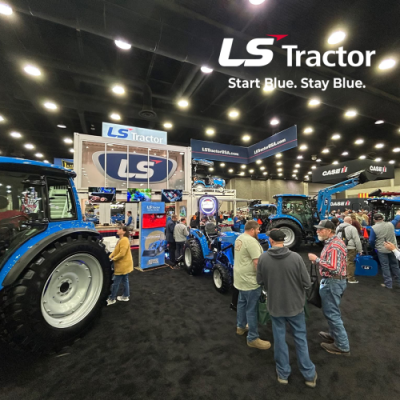
LS Tractor has hit the ground running in 2026, connecting with farmers, dealers, industry partners and LS owners across the U.S. and Canada. From Quebec to California, each event offered a chance for visitors to explore equipment, meet LS experts, and get a first look at what’s ahead for the brand. We shook hands, swapped stories, handed out plenty of LS hats, and showcased a wide variety of LS Tractors built to work as hard as the people who run them.

Across all five shows, LS Tractor welcomed thousands of attendees and displayed a range of tractors designed for every kind of operation. This year also marked an exciting milestone: the first public preview of our new MT2RE Series – a compact tractor built for value-conscious customers who want capability without compromise. With a 35-40 HP diesel engine, hydrostatic transmission, steel fenders and a simplified performance-focused design, the MT2RE is all about giving customers more tractor for their money. And judging by the reactions at NFMS and WAE, people were excited to explore the new machine that delivers maximum value.

SIMAQ – Quebec Industry and Agricultural Machinery Show

January 29-31, 2026 | Quebec City, Quebec

We kicked off the year in Quebec City at SIMAQ, Canada’s largest indoor farm show, and the energy was incredible. With more than 1,550 booths and over 30,000 visitors, the show brought together farmers, dealers and ag professionals from across the region.

Our booth featured a strong lineup, including the MT226HE, MT7101, MT242, MT125, MT352, MT573, MT225S, and the new MT473 Loader. Farmers from across Eastern Canada stopped by to talk tractors, compare specs, and share how LS equipment is helping them tackle tough jobs in tough climates.

SIMAQ has been a cornerstone event since 1993, and this year proved once again why it’s a must attend for anyone serious about agricultural machinery and a key stop for LS Tractor’s Canadian presence.

GCSAA Conference & Trade Show

February 2-5, 2026 | Orlando, Florida

Switching gears from row crops to rolling greens, LS Tractor joined the golf industry’s premier event, the GCSAA for golf course management professionals. This year marked the association’s 100th anniversary making it a historic and record-setting gathering. The celebration held in the Orange County Convention Center drew more than 12,800 attendees, 523 exhibitors, and a record 8,074 seminar seats – one of the largest turnouts in recent years.

At booth 3282, LS Tractor showcased the MT357HC, a model well-suited for turf management and golf facility maintenance. Dave Teigen, LS Western Region Sales Manager, was present and walked visitors through its comfort, visibility, and ease of operation – key features for golf course superintendents and turf management.

With record seminar participation and a century of history behind it, GCSAA 2026 was a milestone event and a great opportunity for LS Tractor to connect with a growing segment of the industry.

Southern Farm Show

February 4-6, 2026 | Raleigh, North Carolina

For another show in the early year lineup, LS Tractor returned to the NC State Fairgrounds in Raleigh, its home region for the Southern Farm Show. This show is the largest agricultural exposition for the Carolinas and Virginia. With more than 400 exhibitors, the show blended equipment displays, educational forums, and community-focused activities where there was a true celebration of agriculture in the Southeast.

Our booth featured a wide range of LS models, including the MT125, MT473CPS, MT357, and MT242HC, drawing heavy crowds throughout the event. From the Ag Development Forum to FFA competitions and lumberjack demonstrations, the show offered something for everyone.

For LS Tractor, the Southern Farm Show is more than an event – it’s a chance to connect with the farmers and landowners who make up the heart of our region.

WAE – World Ag Expo

February 10-12, 2026 | Tulare, California

The World Ag Expo is the largest annual outdoor agricultural show of its kind – and it lived up to its reputation. With 1,200 exhibitors spread across 2.6 million square feet, WAE brought together farmers, producers, and ag leaders from around the world. The show delivered three days of innovation, education, and global ag connections, hosting around 100,000 individuals from over 70 countries.

LS Tractor rolled in with our largest equipment display of the season including the MT7101, MT122, MT226HE, MT242HC, MT345HE, MT342, MT357HC, MT473CPS, MT573CPS, MT232H and the MT2RE preview. Visitors spent time at LS booths P37 – P39 engaging with LS experts, exploring tractors up close, and saw a firsthand look at the MT2RE preview.  The experience allowed potential LS customers to personally witness the durability and performance LS is known for.

The show also spotlighted the International Year of the Woman Farmer, celebrating the growing leadership of women in agriculture. WAE continues to be a powerhouse event for global ag collaboration, and LS Tractor was proud to be a part of it.

NFMS – National Farm Machinery Show

February 11-14, 2026 | Louisville, Kentucky

The National Farm Machinery Show celebrated its 60th year, and LS Tractor celebrated one of its strongest showings yet. With 300,000 attendees and more than 800 exhibitors, NFMS remains the largest indoor farm show in the U.S.  Our booth (#6649) stayed busy from open to close as visitors filled the Kentucky Exposition Center for four days of equipment displays, seminars, and industry networking.

The LS team welcomed thousands of visitors, gained four new dealers, and sold over 100 tractors during the event. That’s the kind of momentum we love to see! Visitors met LS experts including Dave Teigen, LS Western Region Sales Manager, who highlighted the MT7107’s impressive value and lift capacity as well as introduced the preview of the new MT2RE.  Attendees were also excited to meet CJ Drake, LS Brand Ambassador and YouTube creator, who also spoke to visitors about his success and experience with the brand.

LS Tractor featured a strong equipment lineup showcasing the MT226HC Premium, MT7107, MT5, MT2RE, MT357 Black, and MT1. The NFMS tractor pulls at Freedom Hall added to the excitement, making this one of LS Tractor’s most successful showings of the year.

Looking Ahead

Five shows down, and the year is just getting started! From coast to coast and across the border into Canada, LS Tractor’s early 2026 show season has been full of energy, innovation and meaningful connections. With strong attendance, new dealer growth, enthusiastic customer engagement, and the exciting introduction of the MT2RE Series, the year is off to a powerful start. LS Tractor is excited to head into 2026 with confidence and momentum after participating in these incredible shows.


Published on February 26, 2026 and written by Kimberly Steele
New Dealer Spotlight: How Topsham Tractor Found Fast Success with LS Tractor

New Dealer Spotlight: How Topsham Tractor Found Fast Success with LS Tractor

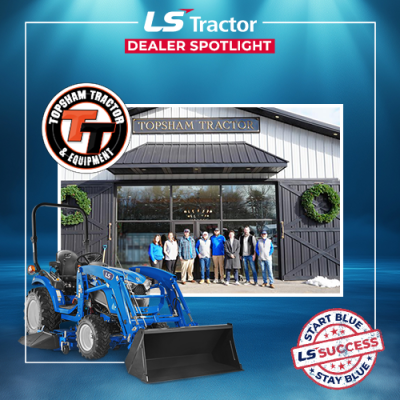
When a dealership grows quickly, builds a loyal customer base, and becomes a trusted name in its community – all within just a few years – it’s worth paying attention. That’s exactly why we’re featuring Topsham Tractor of Topsham, Maine, in our LS Tractor New Dealer Highlight series.

Topsham Tractor may be a newer LS Tractor dealer, but their rapid success reflects something we see again and again across our network: when a family-run business with strong values partners with a brand build on performance, support, and value, great things happen.

In this interview, General Manager Sam Crick shares how Topsham Tractor has grown, why they chose LS Tractor, and what makes the partnership such a strong fit.


youtube placeholder image

A Family-Owned Business Built on Customer Care

Topsham Tractor opened its doors in 2021, expanding from its parent location in Manchester, Maine. Despite being a relatively young dealership, their philosophy is rooted in something timeless: treating customers like family.

Sam explains that their success comes from a simple but powerful approach:

“We take care of customers just as we take care of our own family.”

That mindset has helped Topsham Tractor build a reputation for reliability, trust, and genuine service – qualities that resonate deeply with LS Tractor owners.

Why Topsham Tractor Chose LS Tractor

When deciding which tractor brand to bring into their dealership, Topsham Tractor looked for a partner that matched their commitment to value and customer support. LS Tractor stood out immediately.

According to Sam:

  • LS is aggressive in the marketplace, offering strong programs and consistent marketing support.
  • Finance packages remain competitive, even when other brands pull back.
  • Backend support is strong, giving dealers confidence during both busy and slow seasons.
  • The product lineup delivers unmatched value, especially in horsepower-to-price comparisons

Sam puts it simply:

“It’s been a great brand to have. There is always something to be excited about with LS.”

Products That Impress – And Sell Fast

Topsham Tractor has seen strong demand across the LS lineup, but one series stands out: the MT2 series.

  • They brought in eight units.
  • They sold all eight units in one month.

Sam credits this to LS Tractor’s engineering:

  • Smooth-running Yanmar and Mitsubishi engines (not to mention LS offers models featuring their own LS engines).
  • Compatibility with mid-mount mowers (MT225S), backhoes, and front snow blowers.
  • A 3-range transmission that offers flexibility for travel, work, and heavy digging.
  • Lift capacities that outperform competitors in the same class.

As Sam notes when referencing the customer monthly payment:

“For 30 or 40 horsepower tractors that lift 2500 pounds, nobody else can match that.”

A Full-Service Dealership Focused on Long-Term Support

Topsham Tractor offers far more than sales. Their commitment to customer care extends throughout every part of the ownership experience.

Service Department

  • Factory-certified technicians
  • Routine maintenance, seasonal tune-ups, engine and electrical repairs
  • Tire services, on-site storage, pickup and delivery
  • Fast, professional turnaround times

Parts Department

  • Fully stocked inventory for top brands
  • Aftermarket parts, specialized gear, and accessories
  • Expert guidance for customers unsure of what they need
  • Installation services and special orders

Trade-In Support

  • Fair assessments
  • Help finding the right upgrade
  • Options that fit a customer’s needs and budget

This full-service approach reinforces Sam’s philosophy:

“You only buy this tractor once, but hopefully you live with it forever. If I can take care of that customer from the time they buy it to the time they get rid of it, then we’re doing our job.”

A Bright Future with LS Tractor

Topsham Tractor may be early in their journey, but the results speak for themselves. Strong sales, enthusiastic customers, and a dealership culture built on family values have created a foundation for long-term success.

Sam sees the partnership with LS Tractor as a key part of that future:

“We’re proud to be an LS dealer. What LS offers aligns with what we view as our best practice – value in the tractor, value in the financing, and the after-purchase care.”

Thinking About Becoming an LS Tractor Dealer?

Topsham Tractor’s story is one of many across the country – dealers who join the LS network quickly discover the strength of a brand built on competitive pricing, strong financing programs, dealer-first support, high-performance equipment, and a loyal and growing customer base.

If you’re considering adding LS Tractor to your dealership lineup, stories like Topsham’s show what’s possible when the right team partners with the right brand.


Published on February 20, 2026 and written by Kimberly Steele
Why Seed Swapping Matters: Honoring the Roots of Agriculture

Why Seed Swapping Matters: Honoring the Roots of Agriculture

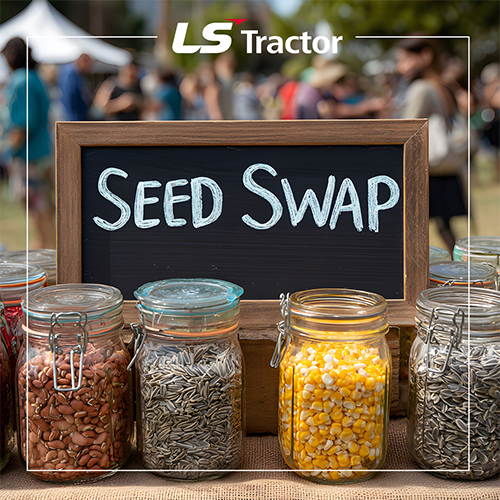
Every thriving field, flourishing garden, and abundant harvest begins with a single, powerful source: the seed. For farmers and growers, seeds are more than tiny kernels of potential – they are the foundation of crop productivity, food security, and sustainable agriculture. National Seed Swap Day, traditionally observed on the last Saturday of January, serves as a reminder of just how meaningful seed sharing is for growers across the country.

The annual celebration has grown significantly since its inception, reflecting a broader movement to preserve seed diversity, strengthen local communities, and reconnect people with the timeless tradition of sharing seeds.

A Tradition Rooted in History

The very first National Seed Swap Day took place on January 26, 2006, in Washington, D.C.  Founded by Kathy Jentz, editor and publisher of Washington Gardener Magazine, the event was created to revive the ancient practice of seed bartering in a modern setting.

Long before seed catalogs and garden centers existed, neighbors exchanged seeds as a way to survive, adapt, and build community. Seeds were among the earliest traded commodities. Farmers carried them across continents, using them as both currency and a way to establish new roots. In North America, early colonists and Indigenous peoples relied on seed exchanges to cultivate staple crops like corn, beans and squash.

Today, seed swapping honors that heritage while adapting it for a new generation of growers.

A Growing Movement

What began as a single event in Washington, D.C. quickly blossomed into a national celebration.

  • By 2010, seed swap events were expanding in size and popularity.
  • In 2012, the day received official recognition as a national holiday.
  • By 2015, seed libraries began appearing across the country, giving communities free access to heirloom and locally adapted seeds.
  • In 2018, online platforms made it possible for gardeners to exchange seeds digitally, expanding participation across the globe.

Today, seed swaps take place in countless communities, both in person and online, connecting growers everywhere.

Why Seed Swapping Matters

Seed Swapping is more than a fun winter activity – it’s a powerful act of stewardship.

  1. Protecting Seed Diversity

In the past century, the world has lost 75% of its edible plant varieties. When heirloom seeds disappear, so do their stories, flavors, and genetic resilience. Sharing seeds keeps these varieties alive.

  1. Strengthening Local Biodiversity

Seeds adapted to local climates grow stronger, healthier plants. Swapping them helps communities build more resilient gardens and farms.

  1. Encouraging Self-Sufficiency

Growing food from seed promotes independence, reduces reliance on commercial supply chains, and deepens appreciation for the natural lifecycle of plants.

  1. Building Community

Seed swaps bring together gardeners of all experience levels. Experts mentor beginners, neighbors share tips, and stories are passed from one generation to the next.

  1. Saving Money and Reducing Waste

Exchanging seeds is cost-efficient and environmentally friendly – a win-win for growers and the planet.

What Happens at a Seed Swap?

Whether hosted in a community center, library, farm store, or backyard, seed swaps follow a simple and welcoming format:

  • Gardeners bring seeds from their best plants.
  • Participants share notes on growing conditions, germination tips, and harvest results.
  • Seeds of all kinds – vegetables, flowers, herbs, fruits, all are exchanged freely.
  • People leave with new varieties to try and new connections within their community.

It’s a unique opportunity to learn, share and celebrate the joy of growing.


How to Participate in a Seed Swap Anytime

Even if the official day has passed, there are plenty of ways to join the movement year-round.


Attend a Local Event

Many towns, libraries, and gardening groups host seed swaps throughout the winter and early spring.


Visit Washington, D.C.

The original National Seed Swap Day event still takes place in the nation’s capital, continuing the tradition that started it all.


Host Your Own Seed Swap

Invite friends, family, and neighbors to bring seeds to share. If you’re organizing:

  • Encourage participants to label seeds clearly.
  • Sort them into categories like vegetables, flowers, herbs, and miscellaneous.
  • Create space for sharing stories, tips and growing advice.

Join Online Seed-Swapping Communities

Digital platforms make it easy to connect with gardeners across the country and exchange seeds by mail. 

Plan Your Garden

Late winter is the perfect time to sketch out your spring garden, start seeds indoors, and gather inspiration from fellow growers.

Share Your Experience

Posting photos or stories from your seed swap helps spread awareness and inspires others to join in.

Keeping Heirloom Seeds and Their Stories Alive

Every seed carries a story: where it came from, who grew it, and how it adapted over time. Seed swapping reminds us that if we don’t share these seeds, we risk losing them forever.

By participating in this tradition, farmers and gardeners help preserve biodiversity, strengthen local food systems, and honor the agricultural practices that have sustained communities for centuries.

At LS Tractor, we’re proud to support the growers who keep these traditions alive – one seed, one story, and one season at a time.


Published on February 5, 2026 and written by Kimberly Steele
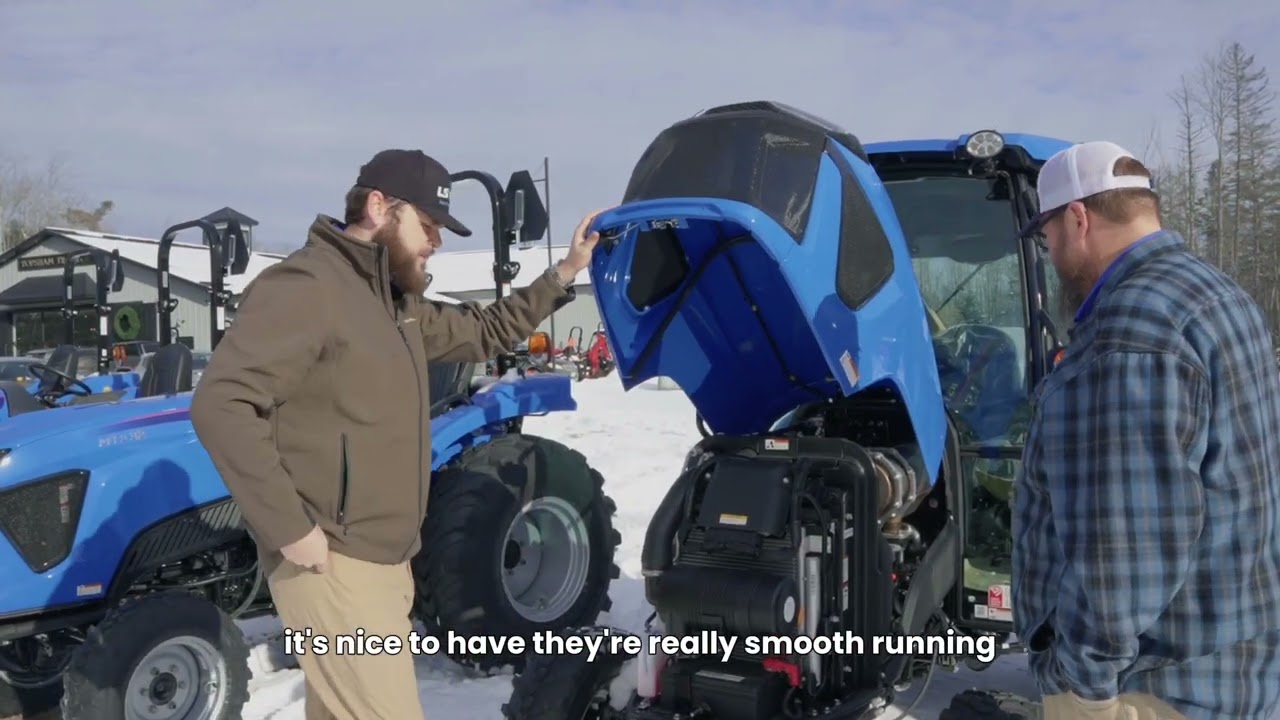
LS Tractor Palestine Warehouse: Building Community, One Pallet at a Time

LS Tractor Palestine Warehouse: Building Community, One Pallet at a Time

At LS Tractor USA, we believe our work goes beyond tractors. It’s about people – and about making a difference in the communities where we live and work. That spirit is alive and thriving at our warehouse in Palestine, Texas, where Production Manager, Travis Bowlin and his team have found a unique way to turn everyday challenges into opportunities to help neighbors in need.

A Warehouse Rooted in Community

When the Palestine warehouse opened in early 2024, it brought steady jobs to local residents in a town of 19,000. For many families in this area, those jobs meant stability and hope. But Travis wanted more than just to provide employment – he wanted LS Tractor to be a proud part of the community fabric. Travis shared, “We wanted to make connections with the community instead of being just another business around the corner.”

Turning Pallets into Purpose

One unexpected challenge became the spark for something bigger. Every tractor assemble at the warehouse arrives with a front loader on a wooden pallet. These pallets weren’t standard size, making them difficult to recycle or reuse.

Instead of seeing waste, Travis saw potential. A Facebook post offering free pallets led to a connection with Sherry Colbert, who had the idea to repurpose them into benches and crosses. Together with her sister and The Jireh Project, a local nonprofit founded by Tammye Lofton and her husband, those pallets became more than wood – they became symbols of hope. Sherry says she loves to do crafts and paint, and she saw potential in the wooden pallets. She and her sister use the pallets to build benches and crosses, then paint them with beautiful designs and faith messages. These creative designs have always been given away, but when people began offering donations, they decided to start accepting these to support a local nonprofit, The Jireh Project.

Feeding Families Through the Jireh Project

The Jireh Project in Palestine was founded in December 2024 after Tammye discovered that families in her community were going days without food. What started as one food drive feeding 16 families has grown into a mission that now provides over 2,000 meals a year, feeding more than 30 families each month. Tammye says their goal is to share their faith by engaging with people in the community and offering words of encouragement.  Their focus is for people to know they matter and are valued.

Thanks to donations and creative fundraising – including benches and crosses made from LS Tractor pallets – The Jireh Project has been able to expand its reach.  LS Tractor even helped raise the $750 needed for the nonprofits’ official status by placing a donation jar on one of the benches at the warehouse entrance.

A Partnership Built on Generosity

The collaboration has blossomed. LS Tractor hosted a BBQ in October to welcome The Jireh Project team, strengthening bonds between employees and volunteers. The warehouse also organized a tractor bucket food drive, filling one of their own LS tractors with groceries to support the cause.

Looking ahead, Travis shared “LS Tractor plans to continue making monthly pallet donations to help sustain the program”. Employees are also volunteering to hand out food boxes at a local apartment complex – where one LS employee lives – ensuring the impact is felt directly in their own neighborhoods,

Giving Back on National Day of Giving

As we celebrate the National Day of Giving on December 2nd, we’re proud to share this story of how a simple challenge – stacks of wooden pallets – turned into a powerful partnership that feeds families, builds community, and inspires hope.

At LS Tractor, we know tractors move the earth. But it’s people, working together, who move hearts. And in Palestine, Texas, that’s exactly what’s happening.


Published on December 2, 2025 and written by Kimberly Steele.