Homestead Projects That Save Money: How an LS Tractor Helps You Save While Becoming More Self-Sufficient

Homestead Projects That Save Money: How an LS Tractor Helps You Save While Becoming More Self-Sufficient

As grocery prices, utility costs, and contractor rates continue to rise, more property owners are looking for practical ways to save money while becoming more self-sufficient. For many homesteaders, that means taking on projects themselves instead of paying for labor, equipment rentals, or ongoing property maintenance.

A compact tractor for homesteading can make those projects significantly easier. From expanding a garden and maintaining a gravel driveway to moving firewood, managing livestock areas, and clearing overgrown property, the right tractor can help you accomplish more with the land you already own.

If you’re looking for money-saving homestead projects, here are 10 practical ways a compact tractor can help you reduce expenses while improving your property.

  1. Grow More of Your Own Food

One of the quickest ways to reduce household expenses is by producing your own fruits, herbs and vegetables. Expanding beyond a small backyard garden into a larger growing area allows you to harvest more fresh produce throughout the season while preserving extra food or winter.

A compact tractor makes preparing new garden plots much easier by helping remove sod, level the ground, move compost, and transport mulch or soil amendments. What might take weeks with hand tools can often be completed in a weekend. Even a simple raised garden bed of herbs and vegetables can offset grocery bills in a single season. The more food you grow, the fewer trips you make to the grocery store – and those savings add up year after year.

LS Tractor Applications:


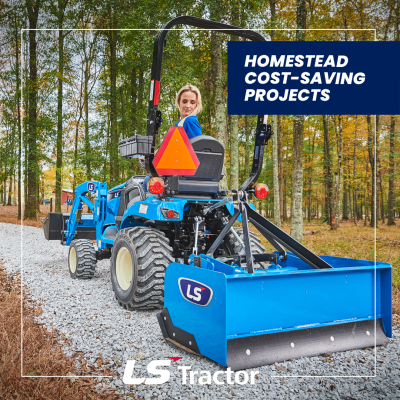
  1. Build and Maintain Your Gravel Driveway

Hiring someone to maintain and re-gravel a driveway can cost thousands of dollars and become an annual expense. Washouts, potholes, and ruts are common after heavy rain, but many of these repairs can be completed yourself.

With a front-end loader and box blade, you can spread new gravel, smooth rough spots, improve drainage, and keep your driveway looking its best without waiting for a contractor. Over the life of your property, doing your own gravel work can save thousands of dollars.

LS Tractor Applications:

  • Gravel spreading
  • Driveway grading
  • Pothole repair
  • Surface leveling


  1. Improve Property Drainage

Standing water can damage gardens, wash out driveways, create muddy livestock areas, and even threaten foundations. Contractors often charge thousands of dollars for trenching and grading. By using your own tractor, backhoe and loader, you can install drainage ditches, improve water flow, or reshape low areas help to help protect your investment while preventing expensive repairs later.

A compact tractor equipped with the right implements makes moving soil and reshaping the landscape significantly easier than doing it by hand.

LS Tractor Applications:

  • Drainage improvements
  • Soil grading
  • Moving fill dirt
  • Creating swales and berms


  1. Save on Heating by Managing Your Own Firewood

If you have wooded acreage, your property may already contain one of your most valuable resources: firewood. Cutting, splitting, and stacking your own firewood can dramatically reduce winter heating bills while providing greater energy independence.

Instead of carrying heavy logs by hand, your tractor becomes the workhorse that transports logs, moves split wood, and stacks firewood with far less physical strain.

LS Tractor Applications:

  • Firewood handling
  • Log transport
  • Loader work
  • Material movement


  1. Build and Maintain Livestock Infrastructure

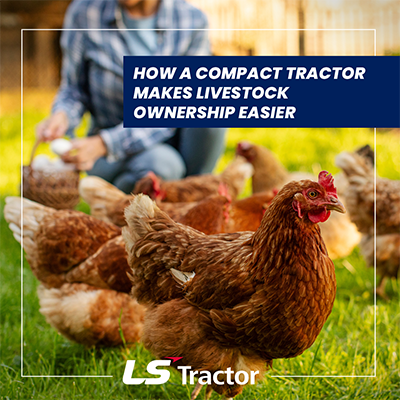
Adding chickens, goats, or sheep can lower grocery costs while providing fresh eggs, milk, or meat for your family. Building coops, fencing, shelters, and feeding stations requires moving lumber, fence posts, gravel, and other heavy materials. A tractor reduces the labor involved and speeds up nearly every phase of construction.

As your livestock operation grows, your tractor continues working by moving feed, bedding, fencing supplies, and manure.

LS Tractor Applications:

  • Moving feed and bedding
  • Transporting fence posts and supplies
  • Preparing livestock areas
  • Moving manure and compost
  • Maintaining pasture


  1. Make Your Own Compost and Save on Soil Amendments

Rather than purchasing expensive soil amendments every growing season, many homesteaders create compost from leaves, grass clippings, livestock bedding, and kitchen scraps. A tractor loader makes turning compost piles, moving finished compost, and transporting organic material much easier than using a wheelbarrow alone.

Healthy compost improves soil, reduces fertilizer costs, and supports healthier crops year after year.

LS Tractor Applications:


  1. Clear Brush and Maintain Your Property

Overgrown fence lines, invasive brush, and fallen trees can quickly take over valuable acreage. Instead of hiring land-clearing crews for every project, many property owners can handle routine clearing themselves using a compact tractor with compatible implements.

Maintaining open fields also improves access, encourages healthier pasture growth, and increases the usable space on your property.

LS Tractor Applications

  • Clearing brush and overgrowth
  • Moving fallen limbs and debris
  • Maintaining fence lines
  • Mowing fields and overgrown areas
  • Moving cleared material


  1. Build Trails and Outdoor Living Spaces

Many homesteaders enjoy their property beyond farming. Walking trails, food plots, picnic areas, fire pits, and small campsites all add value when making the land more enjoyable. Your tractor can move gravel, level ground, transport landscaping materials, and prepare sites for new outdoor projects without requiring multiple equipment rentals.

These improvements increase both enjoyment and long-term property value.

LS Tractor Applications:

  • Preparing and grading trails
  • Moving gravel and stone
  • Leveling outdoor spaces
  • Hauling landscaping materials
  • Clearing project areas


  1. Handle Seasonal Property Maintenance

Owning rural property means there’s always something to do. Storm cleanup, moving mulch, hauling rocks, transporting fence materials, maintaining roads, and cleaning up fallen limbs are ongoing jobs that often require heavy lifting.

Instead of renting equipment several times a year, having your own compact tractor means you’re ready whenever work needs to be done. The convenience alone can save significant time and rental fees over the life of the tractor.

LS Tractor Applications:

  • Storm and debris cleanup
  • Moving mulch, soil, and gravel
  • Maintaining driveways and access roads
  • Hauling materials around the property
  • General seasonal cleanup
  • Mowing pastures and fields


  1. Take on More DIY Homestead Projects

Perhaps the biggest return on investment comes from simply doing more projects yourself. Every driveway repair, landscaping project, drainage improvement, fence installation, or material-moving job you complete without hiring outside labor reduces your long-term property expenses.

Many homeowners discover their tractor becomes the most frequently used machine they own because it replaces countless hours of manual labor while helping them complete projects on their own schedule.

LS Tractor Applications:

  • Moving and grading materials
  • Digging and preparing projects
  • Installing and maintaining fencing
  • Landscaping and grading
  • General property improvement


The Long-Term Value of a Compact Tractor For Homesteading

When people think about return on investment, they often focus only on dollars. But the value of owning a compact tractor extends much further. When viewed over years of ownership, the savings from contractor fees, equipment rentals, and increased efficiency often make a compact tractor one of the smartest investments for a growing homestead.

A quality tractor saves time and it reduces physical labor. It gives you the confidence to take on projects yourself instead of postponing them or paying someone else. It helps you improve your property one weekend at a time while building skills that last a lifetime. For homesteaders, the question isn’t whether they’ll use a tractor – it’s how they ever managed without one.

From expanding gardens and maintaining gravel to handling firewood, improving drainage, and building infrastructure, an LS Tractor becomes more than just a machine. It becomes an investment in your property’s future and a reliable partner in creating a more productive, self-sufficient lifestyle.

Whether you’re just beginning your homesteading journey or looking to get more from your acreage, the right equipment can help turn ambitious plans into lasting savings. An LS Tractor makes self-sufficiency achievable for any small acreage owner. Our tractors and equipment don’t just help you work your homestead – they help you afford it.


Published on August 10, 2026 and written by Kimberly Steele

How a Compact Tractor Makes Livestock Ownership Easier

How a Compact Tractor Makes Livestock Ownership Easier

Backyard chickens, goats, sheep, and small livestock are among the fastest-growing homesteading trends. Learn how LS compact tractors help new livestock owners build infrastructure, manage pasture, move feed, and streamline daily chores.

Backyard poultry and small-livestock ownership continue to surge across the country, especially among new homesteaders looking to turn unused acreage into productive micro-farms. But first-year livestock owners quickly discover the truths: small animals create big workloads. Whether the goal is fresh eggs, healthier soil, sustainable food production, or a more self-sufficient lifestyle, caring for animals quickly teaches us there is always work to do.

That’s why more homesteaders are choosing LS compact tractors – the perfect blend of power, maneuverability, and attachment versatility. From building chicken infrastructure to maintaining healthy pastures, the right equipment helps livestock owners spend less time on manual labor and more time enjoying their animals.

If you’re planning your first year with livestock, here are some of the most valuable tractor projects every new owner should know.

Build Chicken Coops and Runs with a Compact Tractor

One of the first projects for backyard poultry owners is creating a safe, functional environment for their flock. Chickens require more than just a coop – they also benefit from secure fencing, outdoor runs, nesting areas, drainage, and regular maintenance.

A compact LS Tractor equipped with a front-end loader can simplify many of these projects by helping you:

  • Grade land to improve and prevent water pooling around the coop
  • Move gravel for coop foundations
  • Transport lumber and building materials
  • Position prebuilt coops without heavy lifting
  • Install fencing for chicken runs
  • Spread mulch or wood chips around runs
  • Level uneven ground before construction
  • Haul fencing supplies and posts

Instead of moving materials one wheelbarrow at a time, your tractor can transport heavy loads in minutes, making even weekend construction projects far more manageable. As your flock grows, you’ll likely continue expanding or improving your setup, making your tractor one of the most-used tools on your property.

Move Feed and Bedding with a Compact Tractor

Once your animals arrive, the work becomes ongoing. Feed bags, hay bales, bedding, minerals, fencing supplies, and water tanks all need regular transport across your property. Repeatedly lifting 50-pound feed bags or moving bulky bedding by hand can quickly become exhausting.

A compact tractor helps you:

  • Move feed pallets from delivery locations
  • Transport wood shavings, hay and straw bales for bedding
  • Deliver mineral tubs to pastures
  • Haul water tanks and portable feeders

Even on smaller acreages, these routine jobs can consume hours each week. Using your tractor reduces physical strain while helping you work more efficiently. Many new livestock owners discover that the front-end loader becomes one of their favorite attachments simply because it eliminates so much repetitive lifting.

Fence Line Maintenance for Small Livestock Farms

Good fencing is one of the most important investments for livestock owners. Chickens need protection from predators, while goats and sheep require secure fencing to stay safely contained. Keeping fence lines maintained becomes much easier with a compact tractor.

Your tractor can help:

  • Carry fencing materials
  • Transport fence posts
  • Clear brush and saplings along fence rows
  • Grade rough access paths
  • Remove fallen limbs after storms

Routine fence inspections become much easier when you can drive the perimeter rather than walk every acre carrying tools and supplies. Keeping fence lines clean also reduces vegetation that can interfere with electric fencing and makes future repairs much faster.

Use a Compact Tractor for Pasture Maintenance

Healthy pasture management reduces feed costs, and is essential for productive livestock. Without regular mowing and maintenance, weeds can outcompete desirable grasses, brush can invade grazing areas, and uneven growth reduces forage quality.

A compact tractor paired with a rotary cutter or finish mower helps maintain healthier grazing conditions by:

  • Controlling brush growth
  • Mowing weeds before they spread
  • Improving pasture appearance
  • Encouraging more uniform forage growth
  • Creating better access around gates and shelters

Rotational grazing becomes easier when pasture areas remain well maintained. Proper mowing also improves visibility, making it easier to spot hazards, monitor fencing, and observe your animals.

Manage Manure with a Compact Tractor

Manure management is one task every livestock owner quickly learns to appreciate. Whether cleaning chicken coops, goat shelters, loafing sheds, or small barns, organic waste builds up surprisingly fast.

Rather than relying solely on hand tools, a compact tractor can help move:

Many homesteaders choose to compost manure and bedding, creating valuable organic material for gardens, landscaping, and food plots. A loader allows you to transport compost ingredients, turn compost piles, and move finished compost wherever it’s needed around your property.

Grow with the Right Implements

One of the biggest advantages of owning a compact tractor is its versatility. As your livestock operation expands, your tractor can grow with you by adding implements designed for seasonal tasks.

Depending on your property, useful attachments may include:

These implements allow one machine to perform dozens of jobs throughout the year, making them a smart investment for first-time homesteaders.

Why Compact Tractors are Ideal for Small Livestock Farms

Unlike larger agricultural equipment, compact tractors are designed to work comfortably on small acreages while still delivering impressive lifting power and versatility. Whether you’re caring for a few backyard chickens or managing several acres of goats and sheep, a compact tractor provides the capability to tackle demanding jobs without overwhelming your property.

Many first-year livestock owners begin with a handful of animals, only to discover that their projects quickly expand. New fencing, larger shelters, additional gardens, compost systems, and pasture improvements all become easier when you already have the right equipment.

Here’s what many livestock owners love about LS compact tractors:

  • Strong loader lift capacity for feed, fencing, and materials
  • Comfortable operation for long chore days
  • Easy attachment changes for fast project switching
  • Durable construction built for daily farm use
  • Excellent value without sacrificing performance

A compact LS Tractor provides dependable performance for these everyday tasks while offering the flexibility to take on new projects as your homestead grows.

Build Your Homestead One Project at a Time

Raising livestock is rewarding, but it also requires planning, maintenance, and plenty of physical work. Investing in the right equipment early can make every season more productive and enjoyable. From building chicken coops and maintaining fence lines to mowing pasture and moving feed, a compact tractor becomes one of the hardest-working tools on the property.

As backyard livestock trends continue to grow, LS Tractor remains committed to supporting new homesteaders with reliable equipment that makes farm life more productive and enjoyable. Whether you’re starting with a backyard flock or developing a diversified homestead, LS Tractor offers ideal compact tractors built to help you work smarter, accomplish more, and enjoy every step of your homesteading journey.


Published on August 4, 2026 and written by Kimberly Steele

How to Rewild Your Lawn: Create a Pollinator Habitat with an LS Tractor

How to Rewild Your Lawn: Create a Pollinator Habitat with an LS Tractor

Wondering how to rewild your lawn? Creating a pollinator habitat with native wildflowers is one of the easiest ways to improve biodiversity, reduce maintenance, and support local wildlife. Whether you own five acres or fifty, this guide shows you how to rewild your lawn and how an LS Tractor can make the project easier from start to finish.

Every spring and summer, bees buzz from flower to flower, butterflies drift across fields, and hummingbirds dart between blossoms. These pollinators do far more than add beauty to the landscape – they help produce many of the fruits, vegetables, and flowers we rely on every day.

Unfortunately, pollinator populations continue to decline as natural habitats disappear. The good news? You don’t need hundreds of acres to make a difference.

Learning how to rewild your lawn is one of the easiest ways to improve your property while supporting bees, butterflies, hummingbirds, and other important pollinators. For rural homeowners and homesteaders, it’s a practical rural property improvement project that benefits both wildlife and your land.

Whether you own five acres or fifty, setting aside even a small portion of your property as a pollinator habitat can help restore biodiversity while creating a landscape that’s beautiful, low-maintenance, and beneficial for wildlife. Better yet, if you own an LS Tractor, you already have one of the best tools for creating and maintaining these natural spaces.

What Does It Mean to Rewild Your Lawn?

Rewilding doesn’t mean abandoning your property or letting weeds completely take over. Instead, it’s the intentional process of allowing portions of your landscape to return to a more natural state by replacing traditional turfgrass with native grasses, wildflowers, shrubs, and other plants that support local wildlife.

Traditional lawns often require frequent mowing, watering, fertilizers, and herbicides while offering very little food or shelter for pollinators. Even by converting a small section of lawn into a native habitat, you’re creating an ecosystem that works with nature rather than against it.

The best part? You don’t have to transform your entire property overnight.

Starting with a small area – perhaps a corner of your yard, a fence line, or an unused section of pasture – is enough to begin making an impact.

Why Pollinator Habitats Matter When You Rewild Your Lawn

Native pollinators play a critical role in healthy ecosystems. Bees, butterflies, moths, beetles, and hummingbirds pollinate countless flowering plants, fruit trees, vegetables, and crops. Creating habitat for these species offers benefits beyond helping wildlife.

A pollinator-friendly landscape can:

  • Increase biodiversity on your property
  • Improve soil health by encouraging natural plant communities
  • Reduce mowing, watering and chemical use
  • Create food and shelter for birds and beneficial insects
  • Add seasonal color and visual interest
  • Improve resilience during drought and changing weather conditions

For homesteaders and rural property owners, healthy pollinator populations can also improve garden productivity and support healthier orchards and food plots.

Start Small with a Native Pollinator Garden

One of the biggest misconceptions about rewilding lawns is that it has to happen all at once. Instead, think of your property as evolving over time.

A simple 5-by-5-foot planting bed can eventually become a thriving pocket of native flowers buzzing with bees and butterflies. As you gain confidence, you can expand these areas into larger meadow sections connected by natural borders or hedgerows.

Planting native wildflowers is one of the most important steps when you rewild your lawn. Native wildflowers are adapted to your local climate, require less maintenance, and provide nectar and pollen throughout the growing season.

Depending on your region, popular pollinator plants may include:

  • Milkweed
  • Purple coneflower
  • Black-eyed Susan
  • Goldenrod
  • Little bluestem
  • Joe-Pye weed
  • Native asters

A diverse mix of species provides blooms throughout the growing season, ensuring pollinators always have a reliable food source.

How an LS Tractor Helps You Rewild Your Lawn

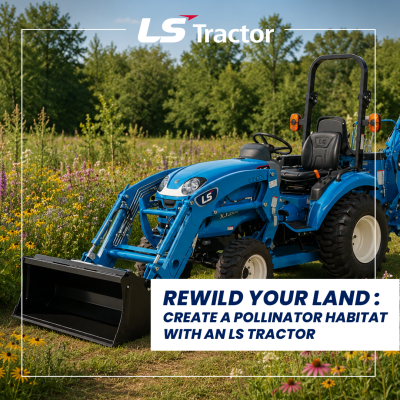
Creating a native meadow or pollinator garden is much easier when you have the right equipment. A compact tractor is one of the most valuable tools for land management, helping prepare seedbeds, remove unwanted vegetation, spread seed, and maintain trails throughout the habitat. An LS Tractor equipped with the proper implements can simplify nearly every stage of the process.

Prepare the Site

Most pollinator gardens begin by removing existing turfgrass or unwanted vegetation. Depending on the condition of your property, a rotary cutter can clear tall grass and brush, while a box blade or landscape rake helps level and prepare the planting area for seeding.

For larger projects, your front-end loader can quickly remove rocks, debris, old fencing, or brush piles before planting begins.

Improve the Soil

Healthy soil creates healthy plants. If compost or organic matter needs to be incorporated before planting, your loader can transport materials efficiently while reducing manual labor. Light tillage can also help prepare seedbeds where appropriate.

Native plants don’t require rich, heavily fertilized soil, but preparing the planting area properly helps improve establishment during the first growing season.

Plant Native Seed

Once the area is prepared, a tractor-mounted spreader makes broadcasting native seed across larger areas fast and consistent. Many landowners establish meadows during dormant seeding or frost seeding periods, allowing natural freeze-and-thaw cycles to work seed into the soil.

Whether you’re planting a quarter-acre or several acres, using your tractor saves significant time compared to hand seeding.

Create Walking Paths

One advantage of a managed meadow is that it remains accessible. Instead of mowing the entire area, use your tractor to maintain narrow walking paths through the flowers. These trails allow you to enjoy wildlife up close while defining the space and keeping it looking intentional.

The contrast between neatly maintained paths and natural vegetation creates an attractive landscape that feels both organized and inviting.

Pollinator-Friendly Landscaping Starts with Smarter Mowing

Pollinator-friendly landscapes don’t eliminate mowing – they simply change when and where you mow. Instead of cutting everything every week, consider leaving selected areas untouched throughout the growing season.

When mowing is necessary:

  • Leave flowering areas intact during peak bloom.
  • Rotate which sections are mowed each year.
  • Maintain clean edges around native plantings.
  • Save larger mowing projects for late fall or winter after most pollinators have completed their life cycles.

This approach preserves nesting habitat while still keeping your property neat and manageable.

Add the Finishing Touches

Pollinator-friendly landscapes become even more valuable when you include features that support wildlife throughout the year.

Consider adding:

Resist the urge to remove every fallen leaf. Leaves act as natural mulch while providing a winter habitat for many beneficial insects.

Stewardship Starts at Home

You don’t need to own a nature preserve to make a meaningful difference. Every native flower planted, every section of lawn converted into habitat, and every pollinator that finds food on your property contributes to a healthier ecosystem.

Whether you want to rewild your lawn, establish a pollinator garden, or create a native meadow, every project is an investment in healthier land. With an LS Tractor, rural property improvement projects like these become easier to accomplish while helping restore habitat for future generations.

At LS Tractor, we know our customers take pride in caring for their land. Creating pollinator habitat is another way to invest in your property – supporting wildlife today while helping ensure healthier landscapes for generations to come.


Published on July 20, 2026 and written by Kimberly Steele

Dealer Success Story: How Lang Equipment and LS Tractor Are Growing Together Through Family Values and Customer Service

Dealer Success Story: How Lang Equipment and LS Tractor Are Growing Together Through Family Values and Customer Service

Discover how Lang Equipment grew from a small family business into a six-location LS Tractor dealership built on exceptional customer service and family values. Watch the Lang family’s recent interview with LS Tractor team members as they discuss their business expansion and a partnership with LS Tractor USA that goes beyond selling tractors.

Some businesses are built around products. Others are built around people.

For Lang Equipment, LLC, it’s always been about both.

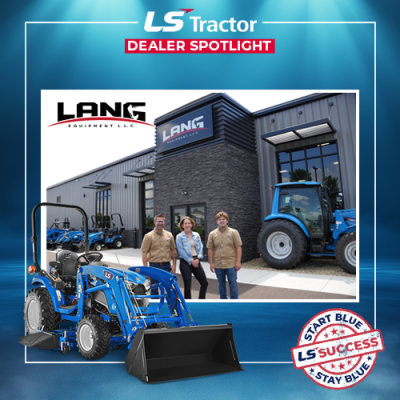
What began in 2010 as a small operation buying, rebuilding, and selling used skid steers has grown into an award-winning, family-owned dealership serving customers across Wisconsin and North Carolina. Along the way, one thing has remained constant: a commitment to treating every customer like family.

Today, Lang Equipment operates six locations while offering outdoor power equipment, compact tractors, mini excavators, powersports equipment, parts, and factory-trained service. As the business has grown, so has its partnership with LS Tractor USA, built on a shared belief that exceptional customer service is just as important as exceptional equipment.

From Humble Beginnings to Six Locations

Like many successful dealerships, Lang Equipment didn’t begin with a grand master plan. Owners Nate and Angie Lang started the business by buying and rebuilding used skid steers before expanding into mowers, compact tractors, mini excavators, and outdoor power equipment. In 2013, they added new tractor lines, opening the door to even greater opportunities.

Today, Lang Equipment serves customers from locations in Marshfield, Medford, Rothschild, Chippewa Falls, and Hudson, Wisconsin as well as Rocky Mount, North Carolina. Despite that impressive growth, Nate says the company’s success has never been about buildings or inventory. It’s about people.

“Our staff really takes charge and does the things necessary to make everybody happy and get everybody on the same page,” Nate explains. “Keeping our customers informed – I think that’s the root of our success. It’s really our people, our employees, and their dedication.”

That employee-first philosophy has helped Lang Equipment earn a reputation for knowledgeable service and long-term customer relationships.

A Business That Grew Alongside a Family

Although Lang Equipment wasn’t originally intended to become a family business, that’s exactly what happened.

“We grew it as a family,” Angie says. “I don’t know that we necessarily started it with the intention of it being a family business, but we got the whole family involved, and our kids grew up with us building the business.”

One of those children is Connor Lang, who now manages the Hudson, Wisconsin location.

Having watched the business evolve from childhood, Connor has gained a unique appreciation for the work behind its success.

“My parents were arms deep in it the entire time,” Connor says. “I watched it from the outside as a young kid, and now that I’m more involved, it’s been really cool to understand what it took – and what it’s going to continue to take to keep growing.”

Even as Lang Equipment has expanded into multiple locations, Connor says the family atmosphere has never disappeared.

“The commitment to the family side of things has never left, even with our growth. That’s something we’ll continue to do as we expand.”

That commitment extends beyond family members to employees and customers alike, creating an environment where relationships matter as much as sales.

A Partnership Built on Shared Values

When Lang Equipment evaluated tractor manufacturers, they weren’t simply looking for another brand to carry. They were looking for a partner that shared their approach to customer care.

“We added LS Tractor because what they offered really fit with what we like to do as far as customer service,” Nate says. “It meshed really well for us because I think their dedication to the customer is very much on the same level.”

For Lang Equipment, the partnership goes beyond selling tractors. That shared commitment has helped both companies build lasting relationships with rural landowners, homeowners, homesteaders, hobby farmers and professionals looking for dependable equipment backed by dependable support.

Why the LS Tractor Lineup Stands Out

The Lang family doesn’t just sell LS Tractor equipment – they use it and know it firsthand.

Connor appreciates the value customers receive across the lineup.

“There are a couple of things about the LS lineup that really put them above the rest,” he explains. “The lift capacities are extremely competitive. The engines are smooth, and premium features like rear hydraulic remotes and pre-plumbed third-function valve come standard on many models. That’s a lot of value packed into one machine.”

His favorite models?

“The MT232 and the MT242. Both are really loaded machines whether you choose a cab or open station.”

Nate also points to the MT242 as one of his favorites.

“I think the power combination is really good for the size, along with the lift capacity.”

For Angie, however, versatility and comfort make the biggest difference.

“The MT125 fits me well,” she says. “The joystick is comfortable, the ride is smooth, and it makes me feel confident doing jobs that I sometimes felt I couldn’t do before.”

Their different perspectives highlight one of the strengths of the LS Tractor lineup: there’s a model designed to meet a wide variety of customers and property needs.

Investing in Service Beyond the Sale

One reason customers continue returning to Lang Equipment is the confidence they have after the purchase.

The dealership invests heavily in technician education and factory certification because Nate believes customers deserve repairs completed correctly the first time. Rather than relying on trial-and-error experience, Lang Equipment equips its technicians with manufacturer training that builds confidence and consistency in every service appointment. This commitment to ongoing education reflects the company’s larger philosophy that outstanding experiences begin long after the initial sale.

Combined with knowledgeable parts departments, responsive communication, and a customer-first mindset, Lang Equipment has built a reputation for supporting equipment owners throughout the life of their machines.

Looking Toward the Future

As Lang Equipment continues to grow, the Lang family sees tremendous opportunity ahead.

“Our future with LS is bright,” Nate shared. “LS brings a great product to the table, and I believe Lang Equipment does a good job of representing the brand by committing the time and doing what it takes to be a good LS dealer.”

That vision isn’t simply about adding locations. It’s about continuing to serve customers the same way they always have – with honesty, knowledgeable staff, dependable equipment, and a family-oriented approach that has guided the business since day one.

As Lang Equipment and LS Tractor USA continue growing together, one thing is clear: when shared values come first, success naturally follows.

If you are considering a tractor purchase in the Wisconsin or North Carolina area, pay a visit to one of Lang Equipment’s locations to learn more about LS tractors and why Lang’s consider them to be above the rest.


Lang Equipment Wausau

1575 County Rd XX, Rothschild, WI 54474

(715) 298-6600


Lang Equipment Marshfield

8868 Heritage Dr., Marshfield, WI 54449

(715) 591-7774


Lang Equipment Medford

501 N. 8th St., Medford, WI 54451

(715) 748-3242


Lang Equipment Hudson

627 Commerce Dr., Hudson, WI 54016

(715) 307-4738


Lang Equipment Chippewa Falls

1212 Lowater Rd., Chippewa Falls, WI 54729

(715) 226-4318


Lang Equipment Rocky Mount

3112 N Church St., Rocky Mount, NC 27804

(252) 231-2687


Published on July 14, 2026 and written by Kimberly Steele

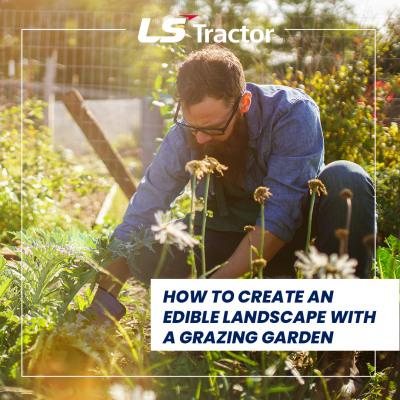
How to Create an Edible Landscape with a Grazing Garden and Backyard Food Forest

How to Create an Edible Landscape with a Grazing Garden and Backyard Food Forest

Discover how grazing gardens, edible landscaping, and backyard food forests can transform your property into a beautiful, productive space with help from LS Tractor.

For generations, the ideal backyard featured a lush green lawn, neatly trimmed shrubs, and colorful flower beds. While those landscapes are certainly attractive, many homeowners are beginning to ask a simple question:

What if my yard could be just as beautiful and provide fresh food at the same time?

That’s exactly what’s driving the growing popularity of grazing gardens, one of the newest trends in edible landscaping. Instead of dedicating one corner of the yard to a traditional vegetable garden, homeowners are blending fruits, vegetables, herbs, edible flowers, and berry bushes directly into their landscapes. The result is a beautiful, productive outdoor space that’s designed to be enjoyed every day.

Whether you call it a foodscape design, a backyard food forest, or an edible landscape, the goal is the same: create a yard that’s as functional as it is beautiful.

Better yet, you don’t need a large farm to get started. Even a modest backyard can become a thriving source of fresh produce with thoughtful planning, quality soil, and the right equipment. An LS compact tractor paired with the proper implements can help homeowners complete projects faster – from preparing the ground and building raised beds to moving compost, mulch, and landscaping materials.

Why More Homeowners are Replacing Grass with Edible Landscaping

Traditional lawns have long been the standard for residential landscapes, but they’re also one of the most resource intensive features of a property. Maintaining a healthy lawn often requires regular mowing, watering, fertilizing, weed control, and seasonal upkeep – all without producing anything beyond visual appeal.

Today’s homeowners are looking for landscapes that work a little harder. By choosing edible landscaping, you can transform underutilized areas into spaces that provide fresh food, support local wildlife, and create year-round visual interest. Instead of growing plants solely for appearance, edible landscapes combine ornamental beauty with practical harvests.

Some of the biggest benefits include:

Perhaps best of all, edible landscaping can be customized to fit almost any property. Whether you own a suburban lot, a rural homestead, or several acres, you can start small and expand your garden over time.

What is a Grazing Garden?

A grazing garden is a relaxed, inviting type of edible landscape where food-producing plants are arranged throughout the yard instead of being confined to neat rows.

Imagine walking through your backyard and picking a handful of cherry tomatoes for lunch, fresh basil for pasta, blueberries for breakfast, or a few strawberries while enjoying your morning coffee. That’s the idea behind a grazing garden – it encourages everyday harvesting while creating a landscape that’s beautiful enough to enjoy even when nothing is being picked.

Unlike a traditional vegetable garden, grazing gardens emphasize variety, accessibility, and aesthetics. Plants are often grouped by color, texture, or growing habits rather than planted in straight rows, creating landscape that feels natural and welcoming.

Popular plants include:

  • Cherry tomatoes
  • Strawberries, blueberries and raspberries
  • Leaf lettuce and kale
  • Snap peas
  • Cucumbers
  • Sweet peppers
  • Green onions
  • Culinary herbs like basil, rosemary, thyme, parsley, and oregano
  • Edible flowers such as nasturtiums and calendula
  • Dwarf fruit trees

Many homeowners place grazing gardens near patios, outdoor kitchens, grilling areas, or walkways so fresh ingredients are always within easy reach.

Quick Take: Grazing Garden vs. Traditional Vegetable Garden

Grazing Garden Traditional Garden
Blends into your landscape Usually planted in rows
Focuses on beauty and food Focuses primarily on food production
Easy to harvest while walking through yard Harvested from a dedicated garden space
Vegetables, flowers, herbs, shrubs and fruit trees Mostly annual vegetables
Enhances curb appeal Often hidden in the backyard


Foodscape Ideas That Blend Beauty and Productivity

One of the misconceptions about edible gardening is that it must look like a traditional vegetable patch. In reality, some of the most successful foodscape ideas are nearly indistinguishable from ornamental landscaping. Thoughtful foodscape design focuses on creating visual appeal while maximizing food production.

Consider incorporating ideas like these:

Let Fruit Trees Become the Focal Point

Instead of planting ornamental trees, choose dwarf apple, pear, peach, or cherry trees. Their spring blossoms provide seasonal beauty, while summer and fall harvests reward you with fresh fruit.

Replace Shrubs with Berry Bushes

Blueberries, raspberries, blackberries, currants, and gooseberries make excellent hedges or border plantings. They offer colorful foliage, seasonal flowers, privacy, and delicious harvests.

Mix Vegetables into Flower Beds

Leafy greens, rainbow chard, purple cabbage, peppers, and herbs can easily be incorporated among ornamental flowers to add texture and vibrant color.

Grow Up Instead of Out

Trellises, arbors, and decorative fencing create opportunities for climbing plants like cucumbers, pole beans, grapes, and even small melons. Vertical gardening makes efficient use of space while adding visual interest.

Add Raised Beds Throughout the Landscape

Rather than grouping every vegetable into one large garden, distribute raised beds throughout the property. This creates smaller destination gardens while making watering and harvesting more convenient.

For homeowners looking for backyard homestead ideas, these simple additions are an excellent way to begin replacing traditional lawns with productive landscapes.

Equipment Checklist for Building an Edible Landscape

One of the advantages of starting an edible landscape is that you don’t have to complete everything at once. Many homeowners build their foodscape one project at a time, adding new features each growing season.

Having the right equipment makes every project easier.

Essential Gardening Tools

  • Garden rake
  • Shovel
  • Wheelbarrow
  • Hand pruners
  • Garden hose or irrigation system
  • Compost and mulch
  • Raised bed materials

Equipment That Saves Time

As your projects become larger, equipment can dramatically reduce manual labor while improving efficiency. An LS compact tractor equipped with the right attachments helps simplify many of the heavier jobs associated with creating an edible landscape.

Some of the most valuable implements include:

  • Front-End Loader: Move compost, mulch, topsoil, gravel, and landscape materials with ease.
  • Box Blade: Prepare and level areas for raised beds, pathways, and planting sites.
  • Rotary Tiller: Incorporate compost into the soil and create an ideal planting bed for vegetables and flowers.
  • Pallet Forks: Transport lumber, raised bed kits, fruit trees, fencing materials, and pallets of soil efficiently

Instead of spending an entire weekend moving materials by hand, the right compact tractor allows you to spend more time plating and enjoying your landscape. Choosing the right implements is only the first step. Keeping them in peak condition ensures they’re ready whenever inspiration strikes.

How to Build a Backyard Food Forest That Produces for Years

If you’re looking to create a landscape that becomes more productive with each passing season, consider adding a backyard food forest to your property.

Unlike a traditional vegetable garden that requires replanting every year, a food forest garden is designed to mimic the layers of a natural woodland ecosystem.  Each layer serves a purpose, creating a healthy, self-supporting environment where plants work together rather than compete.

A typical food forest includes:

  • Canopy layer: Dwarf fruit or nut trees
  • Understory layer: Smaller fruit trees like pears
  • Shrub layer: Blueberries, raspberries, blackberries, currants, or gooseberries
  • Herbaceous layer: Culinary herbs, perennial vegetables, and edible flowers
  • Groundcover layer: Strawberries, creeping thyme, or clover
  • Root layer: Garlic, onions, carrots, or other root vegetables
  • Vine layer: Grapes, kiwi, climbing beans, or cucumbers

By planting in layers, you maximize every square foot of your property while creating natural shade, retaining soil moisture, and encouraging biodiversity.

One of the biggest advantages of a food forest is that it often becomes easier to maintain over time. As leaves, mulch and organic matter break down, they naturally enrich the soil, reducing the need for additional fertilizers. Deep-rooted perennial plants also require less irrigation once established.

The key is to start small. Even one fruit tree, a few berry bushes, and a handful of perennial herbs can become the foundation for a thriving food forest that grows a little larger every year.

How to Replace Grass with Edible Landscaping

If the idea of removing your entire lawn feels overwhelming, don’t worry. You don’t have to do it all at once. The best edible landscapes evolve over time. Start with one manageable project, learn what grows well in your area, and expand as your confidence grows.

Step 1: Evaluate Your Property

Before planting anything, spend time observing your landscape.

Ask yourself:

  • Which areas receive at least six to eight hours of sunlight?
  • Where does water naturally collect after a heavy rain?
  • Are there existing trees or shrubs you can incorporate into your design?
  • Which areas are easiest to access for watering and harvesting?

Taking time to understand your property’s natural conditions will help you choose plants that thrive with less maintenance.

Step 2: Improve the Soil

Healthy gardens begin with healthy soil. Add compost, organic matter, and mulch to improve soil structure, increase water retention, and feed beneficial microorganisms. If your soil is compacted, loosening it before planting encourages stronger root growth.

A rotary tiller behind an LS compact tractor makes this job significantly faster, mixing compost evenly into the soil while creating an ideal planting bed.

Step 3: Build the Framework

Once the soil is prepared, begin creating the permanent features of your landscape.

This may include:

  • Raised garden beds
  • Gravel or mulch pathways
  • Fruit tree planting areas
  • Decorative borders
  • Compost bins
  • Rainwater collection systems

Rather than tackling one enormous project, complete one area at a time. Each finished space becomes immediately usable while leaving room for future expansion.

Step 4: Plant in Layers

One of the defining characteristics of good foodscape design is layering.

Start with trees, then work downward by adding shrubs, herbs, vegetables, flowers, and groundcovers. This approach creates visual interest while making better use of available space.

Don’t forget to include flowering herbs and native plants to attract bees, butterflies, and other beneficial pollinators.

Step 5: Mulch, Water, and Enjoy

Finish each planting area with a generous layer of mulch to help retain moisture, suppress weeds, and regulate soil temperatures.

From there, enjoy watching your landscape mature with each passing season.

Weekend Landscaping Project: Transform Your Backyard

One of the best things about edible landscaping is that you can accomplish meaningful progress in just a few days or weekends.

Here’s an example of how homeowners can begin transforming part of their property in less than one month:

Weekend 1

  • Sketch a simple garden layout
  • Mark planting areas with landscape paint or stakes
  • Gather compost, mulch, lumber, and planting materials

Weekend 2

Weekend 3

  • Plant fruit trees and berry bushes
  • Install herbs, vegetables, and flowers
  • Apply mulch
  • Water thoroughly
  • Add decorative finishing touches like stepping stones or edging

In a short period of time, you’ll have the foundation for an edible landscape that can continue growing for years.

Why a Compact LS Tractor is the Best Tractor for Homesteading Projects

Many homeowners begin with hand tools, but as edible landscapes expand, so does the amount of work involved.

That’s where an LS compact tractor becomes one of the most valuable tools on your property. Instead of replacing hard work, it helps you accomplish more in less time – allowing you to focus on planting, harvesting, and enjoying your landscape.

Preparing the Site

Before plating begins, a box blade smooths uneven ground, grades pathways, and prepares planting areas for raised beds and gathering spaces

Building Raised Beds

A front-end loader quickly moves topsoil, compost, gravel, and mulch while pallet forks make transporting lumber, raised bed kits, fencing materials, and pallets of soil much easier.

Creating Healthy Soil

Healthy soil is the heart of every successful edible landscape. Using a rotary tiller, homeowners can blend compost into the soil quickly and evenly, creating ideal growing conditions while saving hours of manual labor.

Maintaining Your Landscape

Long after planting day, your compact LS tractor continues working year-round.

Use the loader to refresh mulch around trees, transport compost to planting beds, move harvested pumpkins or firewood, clean up storm debris, maintain gravel pathways, or relocate landscaping materials for your next project.

As your edible landscape grows, your tractor becomes an investment that supports every season – not just planting day.

For many homeowners searching for the best tractor for homesteading, an LS compact tractor paired with the right implements provides the versatility needed for gardening, landscaping, property maintenance, and countless weekend projects.

Keeping Your Edible Landscape Growing for Years to Come

One of the greatest advantages of edible landscaping is that it becomes more rewarding with time. While annual vegetables may come and go each season, fruit trees, berry bushes, perennial herbs, and other long-lived plants continue to mature, often producing larger harvest year after year.

Like any landscape, however, a foodscape benefits from routine care. A few seasonal maintenance tasks can help keep your edible landscape healthy, productive, and beautiful:

  • Add a fresh layer of compost each spring to replenish soil nutrients.
  • Apply mulch around trees, shrubs, and garden beds to retain moisture and suppress weeds
  • Prune fruit trees and berry bushes during their dormant season to encourage healthy growth and improve fruit production.
  • Rotate annual crops, when possible, to reduce pest and disease pressure.
  • Regularly inspect irrigation systems and water deeply during extended dry periods.
  • Pull weeds before they have a chance to spread and compete with desirable plants
  • Continue adding flowering herbs and native plants to attract pollinators and beneficial insects.

As your landscape evolves, you’ll likely discover new opportunities to expand. Perhaps you’ll add another raised bed, plant a few more fruit trees, build a composting station, or install a trellis for climbing vegetables. Every season is another chance to make your landscape a little more productive.

Rather than being a one-time project, an edible landscape is an investment that continues to provide fresh food, lasting beauty, and enjoyment for years to come.

Grow More Than a Garden – Grow a Lifestyle

The growing popularity of grazing gardens reflects a larger shift in how homeowners think about their outdoor spaces. Today’s landscapes are no longer just places to admire from the porch – they’re becoming extensions of the home where families gather, children learn where food comes from, and fresh ingredients are harvested just steps from the kitchen.

Whether your goal is to grow a handful of herbs, replace part of your lawn with edible landscaping, or build a thriving backyard food forest, every project begins with a single step. Start with one raised bed. Plant one fruit tree. Add a row of berry bushes. Build your landscape one season at a time.

Before long, you’ll have a yard that’s working just as hard as you are by producing fresh food, supporting pollinators, reducing maintenance, and creating memories that can be shared for generations.

At LS Tractor, we’re proud to help homeowners, gardeners, and homesteaders bring those projects to life. From preparing the ground and building raised beds to hauling compost, planting trees, and maintaining your property through every season, an LS compact tractor and the right implements can help turn today’s ideas into tomorrow’s harvest.

Ready to begin your edible landscaping journey? Visit your local LS Tractor dealer to explore compact tractors and implements designed to help you accomplish more.

Frequently Asked Questions

What is an edible landscape?

An edible landscape is a landscape that combines food-producing plants with traditional ornamental plants to create a space that’s both attractive and productive. Fruit trees, vegetables, herbs, berry bushes, edible flowers, and groundcovers are integrated throughout the yard, allowing homeowners to enjoy fresh produce while maintaining beautiful curb appeal.

What is a food forest?

A food forest is a multi-layered planting system designed to mimic the structure of a natural forest. Instead of growing crops in rows, a food forest combines fruit trees, shrubs, herbs, vines, root crops, and groundcovers that work together to create a productive, low-maintenance ecosystem.

Can you grow enough food on one acre?

Yes. With thoughtful planning, one acre can produce a significant number of fruits, vegetables, herbs, and berries throughout the growing season. Raised beds, vertical growing systems, fruit trees, companion planting, and perennial crops help maximize available space and increase harvests.

How do you convert a lawn into a garden?

Start by selecting a sunny area and removing or covering the existing grass. Improve the soil with compost and organic matter, then install pathways or raised beds before planting. Many homeowners find success by converting one section of the yard at a time rather than tackling the entire lawn at once.

What equipment do you need to build raised beds?

Basic hand tools like shovels, rakes, wheelbarrows, and drills are helpful for smaller projects. For larger landscaping jobs, a compact tractor equipped with a front-end loader and pallet forks makes moving lumber, compost, mulch, topsoil, and other materials much more efficient.

What tractor attachments are best for gardening?

Some of the most useful tractor attachments for gardening include:

These versatile implements help reduce manual labor while making property improvements faster and easier.

How do you prepare soil for a food forest?

Begin by evaluating drainage, sunlight, and soil quality. Incorporate compost or other organic matter to improve soil structure, then mulch heavily to retain moisture and suppress weeds. Plant trees first, followed by shrubs, herbs, groundcovers, and vines to create a layered ecosystem that becomes more productive over time.

What can you grow in an edible landscape?

Almost any food-producing plant can become part of an edible landscape. Popular choices include dwarf fruit trees, berry bushes, tomatoes, peppers, lettuce, kale, herbs, edible flowers, strawberries, grapes, cucumbers, beans, root vegetables, and even mushrooms. The best plant selections depend on your growing zone, available sunlight, and the overall design of your landscape.


Published on July 8, 2026 and written by Kimberly Steele

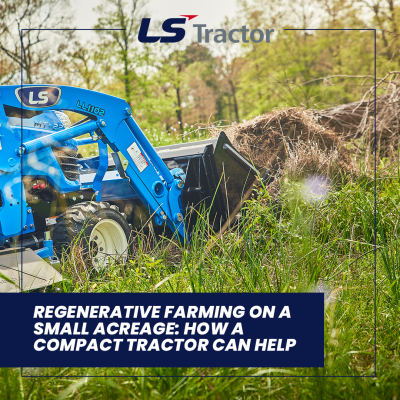
Regenerative Farming on a Small Acreage: How a Compact Tractor Can Help

Regenerative Farming on a Small Acreage: How a Compact Tractor Can Help

Whether you’re managing five acres or fifty, regenerative farming offers practical ways to improve soil health, reduce inputs, and create a more productive property. The best part? You don’t need a large farm to put these principles into practice. With thoughtful land management – and the right equipment – small-acreage owners can build healthier soil, support biodiversity, and create a more resilient homestead.

For many homesteaders, a few acres is more than just a piece of land – it’s an opportunity to grow food, raise animals, improve the soil, and create a more self-sufficient lifestyle. As interest in regenerative agriculture continues to grow, more small-acreage owners are looking for ways to work with nature instead of against it.

Whether you’re growing vegetables, managing a small orchard, raising livestock, or simply improving your property, regenerative farming focuses on building healthy soil, increasing biodiversity, and creating a more resilient ecosystem.

While regenerative homesteading emphasizes natural systems and low-input methods, having the right equipment can make the process far more efficient. A LS compact tractor can help homesteaders tackle labor-intensive projects such as compost management, cover crop establishment, material handling, and pasture maintenance while supporting long-term land stewardship goals.

What is Regenerative Homesteading?

At its core, regenerative homesteading is about improving the land year after year. Instead of simply taking nutrients from the soil, regenerative practices focus on restoring them. The goal is to create a healthier ecosystem that supports productive gardens, pastures, livestock, and wildlife while reducing the need for outside inputs.

While every homestead is unique, most regenerative systems are built around a few key principles:

  • Build healthy, living soil.
  • Keep the soil covered whenever possible.
  • Increase plant diversity.
  • Incorporate animals thoughtfully.
  • Work with local conditions and natural cycles.

The result is a property that becomes more productive, resilient, and sustainable over time.

Healthy Soil Is the Foundation

If there is one thing regenerative homesteaders focus on more than anything else, it’s soil health.

Healthy soil does much more than support plant growth. It stores water, cycles nutrients, supports beneficial microorganisms, and helps plants withstand drought, pests, and other stresses.

Healthy soil also contains billions of microorganisms – including bacteria, fungi, earthworms, and other beneficial organisms – that work together to break down organic matter and recycle nutrients. Protecting this living ecosystem is one of the primary goals of regenerative farming.

One of the fastest ways to improve soil health is by adding organic matter through compost, mulch, and plant residues. Many homesteaders start composting kitchen scraps, garden waste, leaves, and animal bedding to create a nutrient-rich amendment that can be returned to the soil.

Regular soil testing is another valuable practice. Understanding your soil’s nutrient levels, pH, and organic matter content allows you to make informed decisions before applying compost or other amendments, helping you build healthier soil more efficiently.

On a small property, moving and spreading compost by hand may be manageable at first. However, as gardens expand and compost production increases, a compact tractor or utility tractor equipped with a front-end loader can dramatically reduce the labor involved in transporting, turning, and distributing compost around the property.

Keep the Soil Covered

Bare soil is vulnerable to erosion, moisture loss, and extreme temperatures. That’s why regenerative growers work to keep their soil covered throughout the year.

Mulch, cover crops, crop residues, and perennial plantings all help protect the soil from wind, rain, and intense sunlight. They also feed beneficial soil organisms and improve water retention.

Cover crops such as clover, rye, and alfalfa are especially popular among regenerative homesteaders. These plants protect the soil during the off-season while adding organic matter and, in some cases, fixing nitrogen naturally.

A compact tractor or utility tractor can help prepare planting areas, establish cover crops, and manage crop residues. With the right implements, small-acreage owners can seed larger areas quickly and efficiently while minimizing soil disturbance.

Disturb the Soil Less

One of the guiding principles of regenerative agriculture is minimizing unnecessary soil disturbance.

Repeated deep tillage can disrupt soil structure, damage beneficial organisms, and reduce organic matter over time. Instead, many regenerative growers use low-till or reduced-till methods whenever possible.

This doesn’t mean tractors are off-limits. In fact, compact tractors can support regenerative goals when used strategically. Light soil preparation, shallow incorporation of organic materials, and targeted land management tasks can help improve productivity while preserving soil health.

The key is using equipment as a tool to support the land – not constantly reshape it.

Diversity Creates Resilience

Nature rarely grows a single crop in isolation. Healthy ecosystems are built on diversity, and regenerative homesteads follow the same principle.

Many homesteaders incorporate a mix of vegetables, fruits, flowers, herbs, trees, and livestock to create a balanced environment. Companion planting, edible perennials, pollinator habitats, and agroforestry systems all contribute to a healthier landscape.

Fruit trees, berry bushes, asparagus beds, and other perennial crops can provide harvests for years while requiring less soil disturbance than annual plantings.

As these systems expand, a compact tractor becomes useful for transporting mulch, preparing planting sites, moving materials, and maintaining access paths throughout the property.

Integrating Livestock into the System

Animals can play an important role in regenerative homesteading when managed properly.

Chickens, ducks, rabbits, goats, sheep, and cattle all contribute valuable manure that can be composted and returned to the soil. Rotational grazing systems can also help improve pasture health while preventing overgrazing.

Managing livestock often involves moving feed, bedding, fencing materials, and manure. These routine tasks can quickly become time-consuming without equipment.

A compact tractor can help streamline daily chores by transporting materials, maintaining pasture areas, and assisting with fence installation and repairs. This allows homesteaders to spend less time on manual labor and more time managing their animals and land.

Water Management Matters

Healthy soil and effective water management go hand in hand.

Regenerative homesteaders often focus on capturing and retaining rainfall through practices such as mulching, swales, contour planting, and strategic landscaping. These methods help reduce runoff and improve moisture retention during dry periods.

On larger homestead projects, a compact tractor can assist with shaping drainage areas, moving soil, installing water infrastructure, and maintaining access routes. These improvements can make a significant difference in the long-term productivity of the property.

Small Changes Lead to Big Results

One of the most appealing aspects of regenerative homesteading is that it doesn’t require a complete lifestyle overhaul from day one.

Many successful homesteaders begin with simple practices such as:

  • Starting a compost
  • Planting a cover crop.
  • Adding mulch to garden beds.
  • Introducing pollinator-friendly plants.
  • Rotating livestock through pastures.
  • Planting fruit trees or edible perennials
  • Conducting regular soil tests.

Every improvement builds on the last. Over time, these simple practices create healthier soil, stronger plant growth, better water retention, and a more resilient property that requires fewer outside inputs.

Plan Your Regenerative Projects Before Choosing Equipment

As your homestead grows, so will the projects that require equipment. Before investing in a tractor, think about both your current needs and your future goals.

Consider questions such as:

  • How many acres will you maintain?
  • Will you be raising livestock?
  • Are you planning a large vegetable garden or orchard?
  • Will you need to move compost, mulch, gravel, or hay?
  • Which implements will you use most often?

Choosing a versatile compact tractor with the right attachments allows your equipment to grow alongside your homestead, making it a valuable investment for years to come.

Why a Compact LS Tractor Makes Sense for Regenerative Homesteads

As regenerative projects grow, so do the daily tasks required to maintain them. Whether you’re turning compost, moving mulch, maintaining trails or managing livestock areas, a LS compact tractor provides the versatility to handle changing needs throughout the seasons.

When paired with implements such as a front-end loader, rotary cutter, rake grapple, box blade or backhoe, a LS compact tractor becomes an all-purpose tool for regenerative land management. It helps reduce manual labor while making routine projects more efficient, allowing homesteaders to spend more time improving the health of their land and less time performing physically demanding tasks.

The Right Tools for the Journey

Regenerative homesteading is ultimately about stewardship. It’s about leaving the land healthier than you found it while creating a productive and sustainable place to live.

While nature does much of the heavy lifting, the right equipment can help you accomplish more in less time. A compact tractor along with the appropriate attachments and implements provides the versatility needed to manage compost, establish cover crops, move materials, maintain pastures, support livestock operations, and tackle countless other projects that improve the land over time.

Every season offers an opportunity to improve your property. By combining regenerative farming practices with versatile equipment designed for small-acreage work, you can spend less time on labor-intensive tasks and more time building a healthier, more productive homestead for future generations.


Frequently Asked Questions About Regenerative Farming

What is regenerative farming?

Regenerative farming is a land management approach that focuses on improving soil health, increasing biodiversity, and strengthening natural ecosystems over time.

Can you practice regenerative farming on a small acreage?

Many regenerative techniques, including composting, cover crops, rotational grazing, and mulching are well suited to homesteads and properties of just a few acres.

Is regenerative farming the same as organic farming?

Not necessarily. Organic farming focuses on approved growing practices and materials, while regenerative farming emphasizes improving soil health, increasing biodiversity, and restoring natural ecosystems. Many farms use practices from both approaches.

Do you need a tractor for regenerative farming?

A compact tractor can significantly reduce the labor involved in moving compost, maintaining trails, planting cover crops, transporting materials, and caring for livestock.

What tractor size is best for a homestead?

For many small-acreage properties, compact tractors in the 25–45 horsepower range provide the versatility needed for gardening, landscaping, pasture maintenance, and material handling.

What tractor implements are most useful for regenerative farming?

A front-end loader, rotary cutter, tiller, spreader, pallet forks, and post-hole digger are among the most useful implements for regenerative homesteads. These attachments help with compost management, pasture maintenance, fencing projects, material handling, and seasonal property improvements.


Published on June 25, 2026 and written by Kimberly Steele
A Wish on Four Wheels: How One LS Tractor Helped Make a Dream Come True

A Wish on Four Wheels: How One LS Tractor Helped Make a Dream Come True

Some stories remind us that tractors do more than work the land – they help build memories, strengthen communities, and sometimes even change lives.

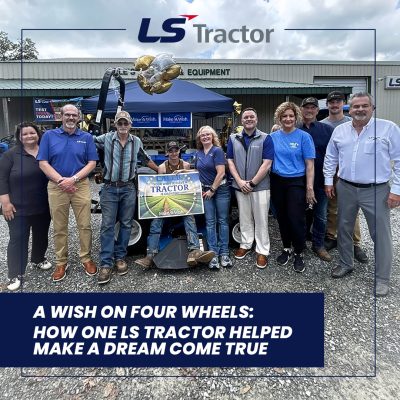
This spring, one remarkable young man from Farmington, Missouri experienced a day he’ll never forget when his dream of owning a tractor became reality. Thanks to a partnership between Make-A-Wish Foundation, Cole’s Tractor & Equipment, and LS Tractor USA, a recent high school graduate, Caleb Olive, received the gift he had been dreaming about for years: a tractor of his very own.

A Dream Worth Fighting For

Over the past two and a half years, Caleb has faced challenges far beyond what most teenagers ever experience. While courageously battling osteosarcoma, a rare form of bone cancer, he held tightly to one simple dream – a tractor that he could use alongside his family for years to come.

Sometimes it’s the simple dreams that become the biggest source of hope.

Throughout surgeries, treatments, and countless difficult days, Caleb never let go of his passion for tractors. That dream became something positive to look toward during an incredibly difficult journey.

When a Community Says “Yes”

The Make-A-Wish Foundation exists to create life-changing wishes for children with critical illnesses, believing that a wish can provide hope, strength, and renewed determination for both children and their families. Every wish is unique, but each one shares the same purpose: reminding a child that anything is possible.

When Make-A-Wish began searching for a way to grant Caleb’s wish, they needed partners willing to help turn that dream into reality.

Cole’s Tractor & Equipment, a family-owned dealership that has proudly served Farmington, Missouri for nearly four decades, immediately embraced the opportunity. Working alongside LS Tractor USA, they helped make what many called one of the largest wishes ever fulfilled through their local chapter.

It was a perfect example of what can happen when businesses become part of something bigger than themselves.

The Best Surprise

On May 27, 2026, Caleb believed he was heading for a particular destination.

Instead, he was greeted by family members, friends, community supporters, representatives from Make-A-Wish, the team from Cole’s Tractor & Equipment, and LS Tractor USA – all gathered for one unforgettable surprise.

Waiting for him was a brand-new LS tractor.

A sign held high read:

“Caleb, your wish to have a tractor is granted!”

As Caleb climbed into the operator’s seat for the first time, there wasn’t a dry eye in the crowd. It wasn’t simply the unveiling of new equipment. It was the celebration of resilience, faith, family, and a young man whose determination had inspired everyone involved.

More Than a Tractor

For most people, a tractor is a machine built to tackle tough jobs.

For Caleb, it represents something much more.

It represents perseverance through difficult seasons.

It represents countless people coming together with one common goal.

It represents new opportunities, future projects, and the chance to spend meaningful time working alongside his family doing something he genuinely loves.

Sometimes the greatest gifts aren’t measured by horsepower or lift capacity – they’re measured by the hope they inspire.

Living the LS Difference

“We are proud to support Make-A-Wish Missouri & Kansas in helping fulfill Caleb’s wish of owning a tractor. His inspiring personal journey and passion for using equipment to help others exemplify the values of hard work, service, and community that are deeply rooted in our industry. We are honored to play a small role in making this wish a reality and look forward to seeing the positive impact Caleb will continue to have on those around him,” states Rich Hollady, Marketing Director, LS Tractor USA.

At LS Tractor, we often talk about helping landowners accomplish more and we know our equipment is built for productivity. But we also know it’s often at the center of life’s most meaningful moments – from family projects and shared accomplishments to milestones that become cherished memories. In Caleb’s case, it became the answer to a wish that carried him through some of life’s toughest days.

Welcome to the LS Family

Caleb recently celebrated another milestone by graduating from high school, making this new chapter in his life even more meaningful.

Everyone at LS Tractor USA is honored to welcome Caleb to the LS family.

We hope this tractor serves as more than just dependable equipment. We hope it becomes part of countless family memories, meaningful projects, and new adventures for years to come.

Congratulations, Caleb. We wish you nothing but blue skies, bright days ahead, and many hours behind the wheel of your new LS tractor!

Learn More


Published on June 30, 2026 and written by Kimberly Steele
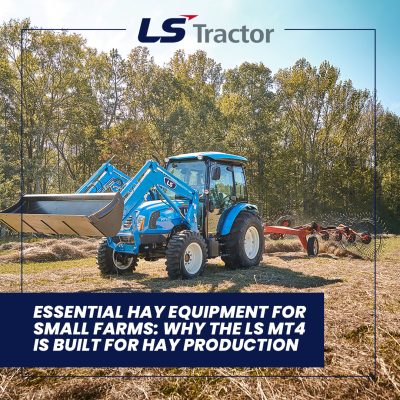
Essential Hay Equipment for Small Farms: Why the LS MT4 is Built for Hay Production

Essential Hay Equipment for Small Farms: Why the LS MT4 is Built for Hay Production

Cutting, drying and baling hay is a rhythm of rural life. Whether you’re producing hay for horses, cattle, sheep, goats or other livestock, success depends on timing, technique, and having the right hay equipment for the job. The right tractor can make every step smoother, safer, and more efficient. That’s where the LS MT4 Series shines as the dependable partner that helps you elevate your hay-making workflow and get the job done right.

Understanding the Hay-Making Process

Producing high-quality hay is a carefully timed process that transforms forage into nutritious feed for livestock. Each step plays an important role in preserving quality, maximizing nutritional value and minimizing losses.

  • Cutting – The process begins by mowing forage crops such as grasses or alfalfa at the optimal stage of growth. Proper timing helps maximize yield, nutritional content and regrowth potential.
  • Drying – After cutting, the forage must dry in the field to reduce moisture content. Proper drying is critical to preventing mold, spoilage and excessive nutrient loss during storage.
  • Tedding – A tedder lifts and spreads the cut forage to improve air circulation and accelerate drying. This step is especially valuable when weather conditions are less than ideal or when drying times need to be shortened.
  • Raking – Once the hay reaches the proper moisture level, a rake gathers the forage into uniform windrows. Well-formed windrows improve baling efficiency and help create more consistent bales.
  • Baling – After the hay has dried sufficiently, a baler compresses the forage into round or square bales for easier handling, transportation and storage. Proper moisture levels during baling are essential to maintaining forage quality.
  • Storage – The final step is protecting the harvest. Storing hay in a barn, shed or covered area helps preserve nutritional value, prevent weather damage and reduce the risk of mold and spoilage until it’s needed for feeding.

The Core Equipment You Need for Hay Production

Each step of hay production operation process relies on a specific tool – and your tractor is the power source that brings them all together.

  1. Tractor Power – A dependable tractor is the foundation of an efficient hay operation. With the horsepower needed to confidently power mowers, tedders, rakes and balers, the LS MT4 Series helps you work more efficiently, cover more acres and stay productive during critical harvest windows.
  2. Mower Conditioner – A mower conditioner not only cuts hay efficiently but also crimps plant stems, allowing moisture to escape faster. Faster drying means less risk of weather damage and improved forage quality.
  3. Tedder – A tedder helps accelerate drying by lifting, fluffing and evenly spreading cut hay. Faster, more consistent drying reduces the risk of weather-related losses and helps preserve forage quality.
  4. Hay Rake – A hay rake gathers and organizes dried forage into uniform windrows, making it easier for your baler to operate efficiently while reducing missed material and field losses.
  5. Baler and Twine – A baler transforms loose forage into compact, easy-to-handle bales that simplify transportation, storage, and feeding. Twine secures each bale, helping preserve its shape and integrity from the field to the barn.
  6. Hay Wagon or Trailer – A hay wagon or trailer helps move bales quickly and efficiently from the field to storage, reducing handling time and allowing you to clear fields faster before weather conditions change.
  7. Bale Spear – A bale spear makes loading, transporting, and stacking round bales safer and more efficient, reducing manual labor while improving productivity around the farm.
  8. Storage Solutions – Proper storage is essential to protecting the quality of your hay investment. A barn, shed or covered storage area helps keep hay dry, preserve nutritional value and reduce the risk of mold and spoilage.

Tips for Producing High-Quality Hay

Producing quality hay requires careful attention to timing, moisture levels, and equipment maintenance. Following these best practices can help preserve nutritional value, improve forage quality, and minimize harvest losses.

Cut at the Right Time

  • Watch the Weather Forecast Closely – Weather is one of the most important factors in successful hay production. Ideally, plan for a four-day window of dry conditions after mowing. Rain can leach valuable nutrients, extend drying times and reduce overall forage quality.
  • Harvest Before Full Bloom – For the best balance of yield and nutritional value, forage should be cut while plants are still leafy and before they reach full maturity or flowering.
  • Grasses – Harvest during the early boot stage, when seed heads are beginning to develop but have not yet emerged. This helps maximize feed quality and palatability.
  • Alfalfa – Cut at approximately 10% bloom to achieve an ideal balance of yield, protein content and digestibility.
  • Leave Adequate Height – Maintain a cutting height of approximately 3-4 inches to promote faster regrowth, improve stand longevity and help protect soil moisture.

Manage Moisture

Proper moisture management is one of the most important factors in producing high-quality hay. A hay moisture tester helps ensure hay is baled and stored safely, reducing the risk of mold, spoilage, nutrient loss, and even spontaneous combustion in storage.

  • Small Square Bales: Target 15-20% moisture
  • Large Round Bales: Target 18% moisture or less
  • Too Wet: Increases the risk of mold, heating, and spoilage
  • Too Dry: Can result in excessive leaf shatter and reduced nutritional value

Rake at the Right Dryness

Proper timing during raking helps preserve forage quality. Rake hay when it is dry enough to prevent soil contamination and excessive moisture, but not so dry that valuable leaves become brittle and break away.

Maintain Equipment

Well-maintained equipment helps maximize productivity and minimize downtime during critical harvest windows. Sharp mower blades, properly calibrated balers and readily available spare parts such as shear pins, rake tines, belts and tires can help keep operations running smoothly from field to barn. From routine maintenance to unexpected repairs, your authorized LS Tractor Dealer is an important partner in maximizing equipment performance, reducing downtime and helping ensure you’re ready when hay season demands action.

Bale in Dry Weather

Successful baling starts with favorable conditions. Whenever possible, plan for a four-day stretch of dry weather after cutting to allow forage to dry properly before baling. Monitoring weather forecasts closely can help protect hay quality and reduce the risk of weather-related losses.

Safety and Efficiency Tips

Hay days are long, hot, and demanding. A few essentials make them safer:

  • Hydration – Working in summer heat can quickly lead to dehydration and fatigue. Keep plenty of water on hand and take regular hydration breaks throughout the day.
  • Protective Gear – Gloves, safety glasses, proper footwear and lightweight, long-sleeved clothing can help protect against dust, sun exposure and minor injuries while working around equipment and hay.
  • Adequate Help – Hay production operations are often more efficient and safer with extra hands, especially when handling and stacking square bales.
  • Set Reasonable Goals – Start early and give enough time to bale and store the finished product, while also incorporating breaks to cool off and hydrate as needed.
  • Spare Parts – Downtime during a narrow harvest window can be costly. Having common replacement parts such as shear pins, rake tines and belts readily available can help keep your operation moving.
  • Inspect Equipment Before Heading to the Field – A quick pre-operation check of fluids, tires, PTO connections and wear items can help prevent unexpected breakdowns and improve overall efficiency.
  • Refer to Your Operator’s Manual – Before operating your tractor or hay equipment, review the manufacturer’s operator’s manual for proper operating procedures, maintenance requirements, and important safety information. Understanding your equipment helps improve efficiency while reducing the risk of accidents and unnecessary wear.
  • Why the LS MT4 is the Ideal Tractor for Hay Work

Making quality hay requires the right combination of timing, equipment and dependable performance. With the horsepower to run essential hay implements, the lifting capacity to handle heavy bales and the comfort to keep operators productive during long harvest days, the LS MT4 is built to support every step of the hay-making process.

From operating mowers and tedders to handling heavy round bales with a front-end loader, the LS MT4 provides the versatility needed to support the entire hay production cycle. Its combination of PTO power, hydraulic performance, lifting capability, and operator comfort makes it an ideal choice for livestock producers and small farm owners alike.

Power that Matches Hay Implements

With up to 63 PTO horsepower available, the LS MT4 provides the PTO performance needed to operate larger mowers, tedders, rakes, and balers efficiently. Whether you’re maintaining a few acres or supporting a growing livestock operation, the MT4 delivers the muscle required to stay productive.

Comfort That Keeps You Going

Successful hay production operations often come down to making the most of a narrow weather window. The MT4’s optional enclosed cab with air conditioning helps shield operators from heat, dust, pollen and fatigue, allowing you to stay comfortable, focused and productive throughout long days of mowing, raking, baling, and hauling.

Versatility for Every Attachment

Choosing the right tractor for hay production can improve efficiency at every stage of the process. The MT4 is built to handle the demands of hay production. With a robust LS LL5001 front-end loader offering up to 3,488 lbs. of lift capacity, a Category II 3-point hitch capable of lifting 3,483 lbs., and strong hydraulic performance, it confidently powers and supports the hay equipment producers rely on throughout the season, including:

  • Bale spears
  • Rakes
  • Tedders
  • Balers
  • Wagons and trailers

Built to Maximize Uptime

In hay production, missed opportunities can quickly impact forage quality and yield. The MT4’s rugged design, proven reliability and easy maintenance access help reduce downtime and ensuring you’re ready to make the most of every harvest window.

The Bottom Line

Baling your own hay for your livestock can be especially satisfying and rewarding. Hay production is more than a seasonal task – it’s a lifestyle built on planning, timing and hard work. The LS MT4 doesn’t replace that effort; it supports it, offering the power, versatility and capability needed for mowing, tedding, raking, baling, and bale handling throughout the season.

Whether you’re selecting equipment for your operation or maintaining it for the seasons ahead, your local authorized LS Tractor dealer is a valuable partner, helping you find the right solutions and providing the service and support needed to minimize downtime and maximize productivity when it matters most.


Published on June 22, 2026 and written by Kimberly Steele
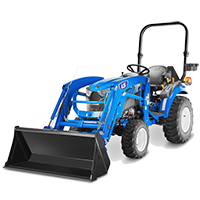
LS Dealer Spotlight: Diamond R Equipment

From the First LS Tractor Sold to Award-Winning Dealer: Diamond R Equipment’s Journey

Diamond R Equipment isn’t just a dealership – it’s a family legacy rooted in agriculture, hard work, and a passion for helping customers find the right equipment. As one of LS Tractor’s top-performing partners and the very first dealership to sell an LS tractor in the United States, Diamond R Equipment has carved out a remarkable place in LS Tractor history.

Watch their recent interview with LS Tractor team members highlighting their journey, their commitment to customers, and why LS Tractor remains the heart of their business.

A Family-Owned Business with Deep Agricultural Roots

Diamond R Equipment was founded in 2001 by Jim Rehagen, who grew up immersed in farming and machinery. What began with a few lines of implements has grown into two thriving locations:

  • Freeburg, MO – 4012 Hwy 63, Freeburg, MO 65035
  • Higginsville, MO – 19677 N Outer Rd, Higginsville, MO 64037

From the beginning, the Rehagen family has been hands-on. Jim oversees service and daily operations, while Trisha Rehagen leads HR and helps guide the business forward. Their children and extended family have also been involved in agriculture over the years, making Diamond R Equipment a true family enterprise.

The LS Tractor Partnership: Loyalty, Opportunity and Growth

Diamond R Equipment’s relationship with LS Tractor began in a way that reflects their values: loyalty and integrity.

They originally sold Montana tractors, which were built by LS. When LS approached them about becoming a dealer, Jim and Trisha initially declined out of loyalty to Montana. But when Montana’s situation changed, LS returned – and this time, the partnership was a perfect fit.

They signed with LS Tractor in 2009 and brought in their first four S3010 tractors. Years later they learned Diamond R Equipment sold the first LS Tractor ever purchased in the United States, which was shipped to North Carolina.

Jim recalls, “We brought in our first four LS tractors and loved them. We sold the first LS tractor ever in the US – we didn’t even know it at the time.”

Today, LS Tractor is their leading line and highest-selling tractor brand.

Why LS Tractor Works for Diamond R Equipment

Jim and Trisha emphasized that LS Tractor’s support and enthusiasm are major reasons for their success.

Jim shared, “One thing I like about selling LS Tractors is when I call LS, their energy; to get the tractor to me, to sell the tractor, and to make the customer happy. That’s not a feature in a brochure – but that’s what helps us sell tractors.”

That passion fuels their dealership and creates a ripple effect for customers.

LS Tractor Features Their Customers Love

  • Well-equipped models with strong standard features
  • Spacious, comfortable cabs
  • Loaders sized correctly for each tractor
  • Balanced, durable designs
  • Excellent value for the price

Trisha’s LS model favorites include the MT3 Series, especially the MT342 and MT347.

Jim’s all-time favorite LS model is the original S3010, but today he also loves the MT7 Series – “because I like bigger toys.”

One of their top sellers is the MT357 hydrostatic cab, a model they move in impressive numbers.

Award-Winning Excellence

Diamond R Equipment earned the 2025 LS Tractor Blue Diamond Dealer Excellence Award, an honor reserved for the top-performing LS dealers nationwide.

This award recognizes:

  • Outstanding sales performance
  • Exceptional parts availability
  • Superior technical service

It’s a testament to their expertise and commitment to the LS brand.

Service That Stands Behind Every Sale

Diamond R Equipment lives by the motto:

“We don’t just sell it; we stand behind it.”

Their service department handles everything from chain sharpening to full engine rebuilds, and their parts department sources components for LS and many other brands. If they don’t have a part in stock, they’ll track it down.

They also offer:

  • Free delivery within 50 miles
  • Fast turnaround times
  • Knowledgeable technicians
  • A full line of aftermarket parts

Their goal is simple: keep customers working without interruption.

A Passion for Helping People

Jim summed up what drives their success:

“My family has always been in agriculture. We love machinery. When I can sell a piece of equipment – whether it’s a lawnmower or a tractor – and it makes someone’s life easier, the joy in their faces is the reward.”

That passion is why customers trust Diamond R Equipment, and why LS Tractor is proud to partner with them.

Looking Ahead: A Strong Future with LS Tractor

Diamond R Equipment sees LS Tractor as a brand on the rise – and they’re excited to grow with it.

Jim shared, “LS is our leading line. Their market share is growing, and there is a lot of passion for selling tractors. They get to know the dealerships on a personal level – we’re not just a number on a wall. That helps us be passionate about doing our job.”

With a shared commitment to quality, service, and customer relationships, the future between LS Tractor and Diamond R Equipment looks bright.

Visit Diamond R Equipment

Whether you’re looking for a compact tractor, a powerful MT7, or expert service, Diamond R Equipment is ready to help.

Experience the difference of a dealership built on family values, agricultural heritage, and a passion for LS Tractor.


Published on June 15, 2026 and written by Kimberly Steele
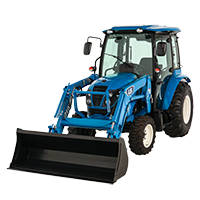
Tractor Implement and Attachment Maintenance Tips: Protect Your Investment and Maximize Performance

Tractor Implement and Attachment Maintenance Tips: Protect Your Investment and Maximize Performance

Your tractor is only as versatile as the implements and attachments that go with it. Whether you’re mowing fields, moving material with a loader, grading driveways, digging trenches, or maintaining food plots, your attachments play a major role in getting work done efficiently.

While most owners stay on top of routine tractor maintenance, implements and attachments often receive less attention. However, neglecting these hardworking tools can lead to reduced performance, costly repairs, and unnecessary downtime. With a few simple maintenance habits, you can extend the life of your equipment and keep every job running smoothly.

Start with the Operator’s Manual

Every implement is designed differently, which is why the manufacturer’s operator’s manual should always be your first maintenance resource. Understanding how an attachment operates helps you identify critical components, recommended service intervals, lubrication points, and signs of potential problems before they become serious.

Taking a few minutes to review maintenance recommendations can save hours of repair time later.

Inspect Attachments Before and After Use

A quick walkaround inspection can help identify small issues before they become major repairs. Before using an attachment, look for:

  • Loose or missing hardware
  • Cracks, bends or structural damage
  • Worn cutting edges or blades
  • Damaged hydraulic hoses
  • Excessive rust or corrosion
  • Missing safety shields or guards

After use, inspect the attachment again for any new signs of wear or damage that may have occurred during operation.

Regular inspections are one of the simplest ways to improve safety and reliability while reducing unexpected breakdowns.

Keep Equipment Clean

Dirt, mud, crop residue, fertilizer, and other debris can accelerate wear and corrosion if left on equipment for extended periods.

After each use:

  • Remove accumulated dirt and debris
  • Wash off fertilizer or chemical residue
  • Clear grass and vegetation from moving components
  • Dry equipment thoroughly before storage

Keeping attachments clean not only improves their appearance but also makes it easier to spot leaks, cracks, and worn components that may otherwise go unnoticed.

Lubricate Moving Parts Regularly

Many tractor attachments contain pivot points, bearings, PTO shafts, and other moving components that require routine lubrication.

Greasing these areas helps:

  • Reduce friction and wear
  • Prevent corrosion
  • Extend component life
  • Improve operating performance

As a general guideline, inspect and grease fittings approximately every 10 operating hours or every couple of weeks during periods of regular use. Always follow the recommendations provided by the equipment manufacturer.

If you hear squeaking, grinding, or metal-on-metal contact, stop operation and inspect the equipment immediately. These sounds often indicate inadequate lubrication or excessive wear.

Check and Tighten Hardware

The vibration created during normal tractor operation can gradually loosen bolts, nuts, pins, and fasteners.

Make it a habit to inspect mounting points and hardware regularly. Pay particular attention to:

  • Hitch connections
  • Blade mounting hardware
  • Loader attachment points
  • Wheel and axle components
  • Protective shields and guards

Loose hardware can affect performance, increase wear, and create safety hazards if left unaddressed.

Monitor Hydraulic Components

Many modern attachments rely on hydraulic systems for power and functionality. Grapples, backhoes, hydraulic augers, and other specialized implements require additional attention.

Regularly inspect:

  • Hydraulic hoses
  • Fittings and couplers
  • Cylinders
  • Hydraulic fluid levels

Look for cracks, abrasions, leaks, or damaged fittings. Even a small hydraulic leak can reduce performance and eventually lead to equipment failure.

Address hydraulic issues promptly to avoid larger repairs and maintain safe operation.

Maintain Blades and Cutting Edges

Attachments that cut, dig, or move material perform best when their working surfaces remain in good condition.

Inspect blades, teeth, and cutting edges regularly for:

  • Excessive wear
  • Chips or cracks
  • Bent components
  • Dull cutting surfaces

Sharp blades produce cleaner cuts, improve efficiency, and place less strain on both the attachment and tractor. Worn components should be sharpened or replaced as needed.

Watch for Signs of Wear

Every attachment experiences wear over time. The key is recognizing when routine wear becomes a maintenance concern.

Common warning signs include:

  • Unusual noises during operation
  • Increased vibration
  • Reduced performance
  • Hydraulic leaks
  • Loose or misaligned components
  • Visible cracks or deformation

Addressing these issues early can prevent more extensive repairs and help avoid downtime during busy seasons.

Follow a Seasonal Maintenance Routine

A seasonal approach helps ensure your equipment is ready when you need it most.

Pre-Season Preparation

Before peak working seasons:

  • Inspect the entire attachment
  • Lubricate all grease points
  • Check hydraulic systems
  • Replace worn parts
  • Verify all hardware is secure

During the Season

While equipment is in regular use:

  • Clean attachment after use
  • Monitor wear points frequently
  • Check lubrication schedules
  • Inspect hoses, fittings, and hardware

End-of-Season Care

Before storing equipment:

  • Thoroughly clean all surfaces
  • Repair damaged components
  • Touch up chipped paint if needed
  • Apply rust preventative products
  • Lubricate exposed metal surfaces

A little attention at the end of the season can significantly reduce maintenance needs when the next season begins.

Store Attachments Properly

Proper storage is one of the most overlooked aspects of attachment maintenance.

Whenever possible, store implements:

  • Indoors in a dry building
  • Under a roof or protective cover
  • On level ground
  • Away from standing water and excessive moisture

Reducing exposure to rain, snow and direct sunlight helps prevent rust, corrosion, and premature deterioration.

Keep Maintenance Records

Maintaining a simple inspection and service log can help track:

  • Lubrication schedules
  • Repairs and replacements
  • Hydraulic service intervals
  • Wear patterns
  • Seasonal maintenance tasks

These records make it easier to identify recurring issues and ensure important maintenance items aren’t overlooked.

Get More Value from Every Attachment

LS Tractor owners depend on their equipment to tackle a wide range of property maintenance, landscaping, agricultural, and construction tasks. By giving implements and attachments the same level of care as the tractor itself, you can improve performance, reduce downtime, and extend the life of your investment.

A few minutes spent inspection, cleaning, lubricating and maintaining attachments throughout the year can help ensure they’re ready to perform whenever the next job calls.

Published on June 10, 2026 and written by Kimberly Steele
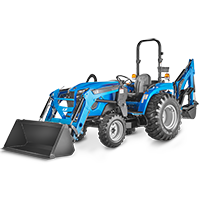
Community Connections: LS Tractor Helps Bring Hands-On Learning to Life at Raleigh Oak Charter School

Community Connections: LS Tractor Helps Bring Hands-On Learning to Life at Raleigh Oak Charter School

At LS Tractor, community involvement goes beyond supporting the people who use our equipment every day. It also means investing in the next generation through meaningful, hands-on experiences that spark curiosity, learning and connection.

That spirit came to life this spring when Tyler Vowell, LS Tractor Technical Support Consultant, helped organize a special “Tractor and Truck Day” event for preschool students at Raleigh Oak Charter School.

For Tyler, the event was personal from the start. As a parent of a student at the school, he was already actively involved in school activities and volunteering efforts. During a parent-teacher conference, school staff noticed Tyler’s LS Tractor apparel and asked if he might be willing to bring tractors to campus for the children to explore in person.

The answer was an easy yes.

Turning Curiosity into Hand-On Learning

Raleigh Oak Charter School regularly hosts community-centered events designed to encourage children to interact with the world around them through experience and exploration. The preschool’s “Tractor and Truck Day” fit perfectly within that mission.

With support from the LS Tractor team, Tyler coordinated the event and transported two tractors to the school campus for students and families to enjoy:

Held on April 18th, the event welcomed preschool students and families throughout the afternoon, giving children the chance to climb onto the equipment, explore the controls, ask questions, and experience tractors up close for the very first time.

For many children, it was unforgettable.

“One boy was especially fascinated with the tractor,” Tyler shared. “I let him sit on it while I started it up and demonstrated using the bucket with some mulch. Watching his eyes light up seeing the mulch move and fall from the bucket was a moment I’ll never forget.”

Another student was captivated by the tractor lights and enthusiastically explored every part of the machine she could reach.

“These kids were genuinely excited,” Tyler said. “It gave them exposure to equipment in a safe, fun environment while allowing them to learn through hands-on interaction.”

Supporting Families and the Local Community

Beyond creating an exciting day for students, the event also served a larger purpose for the school community.

As Raleigh Oak Charter School settles into a new location, the school has been raising funds for outdoor play equipment and expanded recreational spaces for students. Donations collected during the event helped the school reach approximately 10 percent of its fundraising goal in a single day.

According to Tyler, the turnout exceeded expectations, with approximately 100 participants attending throughout the three-hour event, including both current students and prospective families. The strong community support helped the school successfully meet its fundraising goal for updated playground equipment. LS Tractor also helped support the event experience by providing:

  • Canopies for shade
  • Coolers and water for attendees
  • Stuffed animals, cookies, and giveaways for children and families

Parents attending the event also had the opportunity to learn more about LS Tractor equipment, dealer locations, and safety practices. Many attendees worked in landscaping, construction, and related industries, creating natural conversations about how compact tractors can support both business and property needs.

Reflecting the Values of LS Tractor

For Tyler, the event reflected something bigger than equipment.

“LS Tractor allowing me to do this showed me they truly care about the community,” he explained. “This was the first time our Raleigh office had participated in something like this for a school, and I hope it’s only the beginning.” Tyler would like to help organize similar events not just locally in Raleigh, but across North Carolina.

The event also opened doors to additional outreach opportunities, including future community events and partnerships supporting local organizations and food banks.

Tyler believes that kind of involvement matters.

“I grew up deeply rooted in the agricultural community, and giving back has always been important to me,” he said. “Being able to help my son’s school while representing LS Tractor made this experience even more meaningful.”

Tyler said the experience was rewarding not only personally, but professionally as well. He appreciated the opportunity to represent LS Tractor in a meaningful way while helping create a memorable experience for local families.

Encouraging Others to Get Involved

When asked what advice he would give fellow LS Tractor team members interested in similar outreach opportunities, Tyler’s message was simple:

“Go for it. Don’t shy away from it. If you have the opportunity to do something for your kids, neighbors, church, or school, do it. The world doesn’t always revolve around the dollar bill. Focus on what can benefit others.”

At LS Tractor, those moments of service, connection and community are what truly help build lasting relationships. “I’m grateful to be part of a team that values community engagement and professional development,” explains Tyler. Whether its supporting local schools, helping families discover new experiences, or simply creating opportunities for children to learn and explore, events like this remind us that strong communities are built one interaction at a time.


Published on June 3, 2026 and written by Kimberly Steele
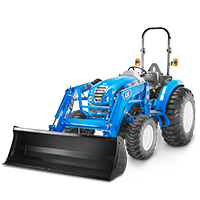
Composting 101 – Turn Everyday Waste into Garden Gold

Composting 101 – Turn Everyday Waste into Garden Gold

Composting is one of the simplest ways to create healthier soil, reduce household waste, and improve the productivity of your garden, lawn, or landscape. Whether you have a few raised beds, a large backyard garden, or acreage managed with an LS Tractor and attachments, composting can help you get more from your property while cutting down on what goes to the landfill.

Food scraps and yard debris make up a significant portion of household waste, yet many of those materials can be transformed into nutrient-rich organic matter that benefits plants, improves soil structure, and helps retain moisture. Backyard composting and vermicomposting (worm composting) are practical, low-cost ways to recycle organic material right at home.

Why Compost Matters

Healthy soil is the foundation of a productive property. Compost improves soil by increasing organic matter, helping roots grow more easily, improving drainage in heavy clay soils, and increasing water retention in sandy soils. It can also help suppress certain plant diseases and reduce erosion.

For property owners managing gardens, landscaping projects, orchards, or food plots, compost becomes a valuable resource that can reduce reliance on purchased soil amendments. And for those using tractors for property maintenance, composting offers another way to put leaves, grass clippings, and garden debris to good use instead of hauling or burning them.

Understanding the Basics of Composting

Composting is the controlled breakdown of organic materials into a dark, earthy material known as compost. Microorganisms do most of the work, but success depends on creating the right environment with:

  • A balance of “greens” and “browns”
  • Proper moisture
  • Adequate airflow
  • The right pile size

Browns vs. Greens

A successful compost pile needs both carbon-rich and nitrogen-rich materials.

“Browns” (carbon-rich materials):

  • Dry leaves
  • Straw
  • Sawdust
  • Twigs
  • Cardboard
  • Paper products

“Greens” (nitrogen-rich materials):

  • Vegetable scraps
  • Fruit scraps
  • Coffee grounds
  • Grass clippings
  • Plant trimmings

A simple rule is to aim for roughly a 2-to-1 ratio of browns to greens.

Hot Composting vs. Cold Composting

Slow (Cold) Composting

Cold composting is the easiest option for beginners. Simply make a 3 to 4 cubic foot pile of leaves, yard debris, and food scraps together, keep the pile lightly moist, and let nature do the work over time. This method requires little maintenance, but decomposition may take close to a year.

Fast (Hot) Composting

Hot composting breaks materials down much faster and produces a richer, finished compost in a matter of months. To create a hot pile:

  • Use a bin or build a pile at least 3 feet wide, deep, and tall
  • Alternate layers of browns and greens
  • Water each layer thoroughly
  • Turn the pile weekly to introduce oxygen

A properly managed hot pile can reach temperatures between 140˚F and 150˚F, helping destroy weed seeds and many harmful pathogens.

The Importance of Moisture and Airflow

Moisture and oxygen are two of the biggest factors in successful composting.

Your pile should feel like a wrung-out sponge – damp, but not soaking wet. If the pile becomes too dry, decomposition slows down. If it becomes too wet, it can smell unpleasant and turn anaerobic with no air.

Turning the pile regularly keeps oxygen moving through the material and speeds up decomposition. Large piles of compacted grass clippings or wet leaves can restrict airflow, so mixing materials thoroughly is important.

Smaller Pieces Break Down Faster

Particle size matters. Chopping or shredding materials creates more surface area for microorganisms to work on, which speeds decomposition.

Property owners often use lawn mowers, chippers, or tractor-powered equipment to process leaves, branches, and garden debris before adding them to the compost pile. Managing organic material efficiently is another way tractors can support overall property maintenance and sustainability efforts.

What Should NOT Go into a Compost Pile

While many organic materials compost well, some should stay out of the pile entirely.

Avoid adding:

  • Meat, fish, bones, or dairy products
  • Pet waste or cat litter
  • Diseased plants
  • Weeds gone to seed
  • Chemically treated wood
  • Yard clippings treated with pesticides
  • Pine needles
  • Glossy or heavily coated paper products
  • Oils, grease, or fats

These materials can attract pests, create odors, or introduce harmful pathogens

What is Vermicomposting?

Vermicomposting uses earthworms, specifically red wigglers, to break down food scraps into a nutrient-rich material called vermicompost.

Unlike traditional compost piles, worm bins:

  • Require very little space
  • Can be kept indoors or in garages
  • Need no turning
  • Produce minimal odor when maintained properly

Vermicompost is rich in beneficial microbes and nutrients that plants can readily absorb. It is commonly used in gardens, raised beds, potted plants, and lawns.

Setting Up a Worm Bin

Starting a worm bin is simple and inexpensive. Most systems need:

  • A ventilated container with drainage
  • Damp bedding material such as shredded newspaper or cardboard
  • Red wiggler worms
  • Kitchen scraps

Worm bins should stay between 59˚F and 77˚F and remain consistently moist.

Good foods for worms include:

  • Vegetable scraps
  • Fruit scraps
  • Coffee grounds
  • Tea bags
  • Crushed eggshells

Avoid feeding worms:

  • Meat
  • Dairy
  • Cirtus
  • Onions
  • Garlic
  • Salty or greasy foods

With proper care, worms can process a surprising amount of food waste while creating a highly effective soil amendment.

Compost Tea and Vermicompost Tea

Many gardeners also use compost tea or vermicompost tea to support plant health.

These liquid extracts are created by soaking finished compost in water and are commonly applied around the base of plants or used as foliar sprays. Compost teas may help improve microbial activity and support healthy plant growth when used properly.

How to Know When Compost is Ready

Finished compost should:

  • Be dark brown or black
  • Smell earthy
  • Have no recognizable food scraps or leaves remaining
  • Feel crumbly and loose

Once ready, compost can be mixed into garden soil, spread around trees and shrubs, used in raised beds, or applied as a lawn top dressing.

Composting for a More Productive Property

Whether you maintain a backyard garden or manage several acres, composting is a practical way to improve soil health while reducing waste. Combining composting with efficient property management tools including tractors, loaders, and landscaping attachments, can help property owners make the most of their land year-round.

At LS Tractor, we know productive land starts with healthy soil. Composting is a simple step that can help property owners build stronger gardens, healthier lawns, and more sustainable properties for years to come.


Published on May 29, 2026 and written by Kimberly Steele