

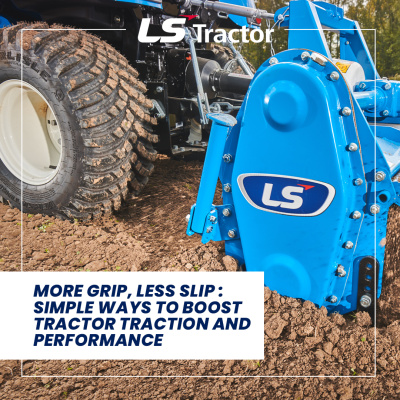
More Grip, Less Slip: Simple Ways to Boost Tractor Traction and Performance
When you invest in a tractor, you expect it to deliver reliable power, efficiency, and performance day in and day out. At LS Tractor, we design our equipment to do exactly that. But even the most capable machine can only perform as well as the traction it puts to the ground.
When it comes to getting the most out of your tractor, traction is everything. It’s what allows your machine to convert engine power into real work – pulling implements, climbing grades, and maintaining control in tough field conditions. Without proper traction, even the most powerful tractor can fall short.
Understanding how to optimize traction – through ballast, tire selection, and setup – can dramatically improve efficiency, reduce fuel costs, and protect your soil.
What is Tractor Traction – and Why it Matters
Traction is the force that allows your tractor’s tires to grip the ground and move forward (or stop when braking). It’s how power is transferred from the drivetrain to the soil.
When traction is insufficient, tires slip. That slip leads to:
- Increased fuel consumption
- Reduced productivity
- More time in the field
- Soil damage from rutting and compaction
A properly set up tractor ensures that power is used efficiently – not wasted spinning tires.
Finding the Right Balance: Traction vs. Flotation
Traction and flotation are closely related, but often work against each other.
- Traction focuses on grip and pulling power
- Flotation focuses on staying on top of the soil to avoid sinking and compaction
Heavier machines with more weight tend to gain traction but risk increasing soil compaction. Lighter setups improve flotation but may sacrifice grip.
The key is balance. Your setup should reflect your soil type, moisture conditions, and the work you’re doing throughout the year.
Ballasting: The Foundation of Traction
One of the most effective ways to improve traction is proper ballasting. A general guideline is 100-120 pounds of total tractor weight per rated horsepower. Proper ballasting does more than improve traction – it also plays a major role in stability, steering control, safety, and overall tractor performance, especially during heavy-duty operations or when using mounted implements. Ballast can be added through liquid-filled tires, cast iron wheel weights, or a combination of both depending on the task and operating conditions.
However, more weight isn’t always better. Excessive ballast can increase rolling resistance, raise fuel consumption, and contribute to unnecessary soil compaction. The goal is to use only the amount of weight needed to maintain safe handling, stability, and efficient power transfer to the ground.
Liquid Ballast
Liquid ballast involves filling tires with fluid to add weight low to the ground.
Benefits:
- Improves traction on loose or slippery surfaces
- Lowers center of gravity for better stability
- Helps counterbalance loaders and heavy attachments
- Cost-effective compared to other options
Considerations:
- Less flexible – you can’t easily adjust the weight
- May impact ride quality at higher speeds
- Some fluids can be corrosive or hazardous
Common liquid ballas options include:
- Water (simple but freezes easily)
- Beet juice (heavy, non-corrosive, but more expensive)
Wheel Weights
Wheel weights are another effective way to add ballast without the drawbacks of liquid.
Benefits:
- Easy to install, remove and adjust (clip on or adhesive)
- Maintain tire flexibility and ride quality
- Improve balance and stability
- Distribute weight evenly across all wheels
They are especially useful for operators who frequently switch tasks or field conditions.
Proper Weight Distribution Matters
Effective ballasting isn’t just about adding weight – it’s about distributing it correctly. Proper weight balance helps maintain steering responsiveness, traction, and machine stability in the field and during transport.
As a general guideline, approximately one-third of the tractor’s total weight should remain on the front axle. For many 4WD tractors, ideal front axle weight distribution typically falls between 40-45% of the machine’s total operating weight.
When using heavy rear-mounted implements, it’s important to maintain enough weight on the front wheels to preserve steering control, particularly when transporting equipment across uneven terrain or at higher travel speeds. Likewise, tractors operating with front-mounted attachments may require additional rear ballast to maintain traction and stability.
Before adding ballast, operators should always confirm that tire pressures are properly adjusted for the tractor’s load and tire specifications. Correct tire inflation works together with ballast to maximize traction, improve efficiency, and support safe operation.
No matter the application, operators should follow ballast recommendations outlined in both the tractor and implement manuals and reduce speed when operating on rough or uneven ground.
Tires: Your Direct Connection to the Ground
Tires play a critical role in both traction and flotation. Choosing the right type and using it correctly makes a significant difference.
Tire Types and Their Uses
- R1 (Agricultural Tires):
Deep, widely spaced lugs for maximum traction in fields, mud and snow
- R3 (Turf Tires):
Wide, shallow tread designed to protect grass and finished surfaces
- R4 (Industrial Tires):
Durable, versatile tires for hard surfaces and heavy loads
- R14 (Hybrid Tires)
Crossover tires that blend the tread features of agricultural, turf, and industrial tires giving them durability, less ground disturbance, and a smooth ride. Designed for versatility on mixed terrain surfaces.
Each tire type is designed for specific conditions. Matching your tire to your work environment is essential.
Tire Technology: Getting More from Every Pass
Modern tire innovations can significantly improve performance:
- IF (Increased Flexion) and VF (Very Increased Flexion) tires allow lower air pressure while carrying the same load
- Create a larger footprint
- Put more lugs in contact with the ground
- Improve traction and reduce compaction
These technologies can increase productivity and often pay for themselves through fuel savings and reduced wear.
Tire Pressure: The Most Overlooked Factor
If there’s one simple step that delivers immediate traction results, it’s proper tire inflation.
- Overinflation reduces footprint size and traction
- Underinflation can damage tires and reduce efficiency
Lower pressure increases the tire’s contact area, improving grip and reducing slippage. However, higher pressure is needed for road transport.
For best results:
- Adjust pressure based on load and speed
- Check tire pressure daily
- Use manufacturer load/inflation tables
Consistent tire maintenance is one of the simplest ways to protect both tractor performance and long-term equipment life. Daily tire inspections should include checking for proper inflation, visible damage, and uneven wear patterns that could affect traction, ride quality, or safety. Damaged tires should be repaired or replaced promptly to avoid larger performance issues in the field.
Maintaining recommended tire pressure is critical not only for traction, but also for tire durability. Underinflated tires can lead to excessive sidewall flex, bead wear, uneven tread wear, and internal tire damage that may shorten tire life. On the other hand, overinflated tires reduce the tire’s contact patch and increase the risk of impact damage when operating across rough terrain. Excessive air pressure can also place unnecessary stress on wheels and rims under heavy loads.
Tire pressure requirements may vary depending on axle load, attachments, ballast, and operating conditions, making routine pressure checks especially important throughout changing seasons and applications. Proper inflation helps ensure your LS Tractor maintains the traction, stability, and efficiency needed to perform at its best in the field, on the jobsite, or around the property.
For safety, tire mounting, dismounting, and repairs should always be handled by qualified service personnel using the proper tools and procedures.
Matching Setup to Soil Conditions
No single setup works year-round. Smart operators adjust based on conditions:
- Wet conditions:
Reduce ballast, increase flotation, consider deeper lug tires
- Dry or heavy soils:
Add ballast and maximize traction
- Transport work:
Increase tire pressure for stability and efficiency
Thinking seasonally, and even daily, can make a major difference in performance.
The Bottom Line
Maximizing tractor traction isn’t about a single solution – it’s about a system. At the end of the day, getting the most from your tractor comes down to how effectively it puts power to the ground. That’s where thoughtful setup makes all the difference.
At LS Tractor, we build machines engineered for durability, strength, and versatility – but optimizing traction through proper ballasting, tire selection, and inflation is what unlocks their full potential in the field.
By taking a proactive approach to traction management, operators can improve fuel efficiency, reduce wear on equipment, minimize soil compaction, and increase productivity across every season.
The right combination of weight, tires and pressure ensures your tractor is working smarter, not harder, no matter the task at hand. When your tractor is properly equipped for the conditions, you’re not just maintaining performance, you’re maximizing it.
Published on May 27, 2026 and written by Kimberly Steele